 Bangladesh
 AustraliaBangladesh
Australia tour of Bangladesh T20I Series, 2026
BANvsAUS
T20I · Match 2
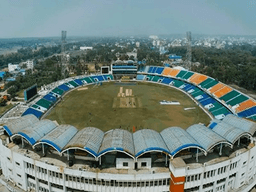
Bir Sreshtho Flight Lieutenant Matiur Rahman Stadium, Chattogram
AustraliaMatch analysis
Select a section to explore the available match analysis.










| BAN | AUS | Winner | Series | Match | Date | Ground | MOTM |
|---|---|---|---|---|---|---|---|
| 131/10 (Balls 114) | 133/6 (Balls 110) | AUS | Australia tour of Bangladesh T20I Series, 2026 | Match 1, T20I | 17-06-2026 | Bir Sreshtho Flight Lieutenant Matiur Rahman Stadium, Chattogram | Adam Zampa |
| 140/8 (Balls 120) | 100/2 (Balls 68) | AUS | ICC Men's T20 World Cup | Match 44, T20I | 20-06-2024 | Sir Vivian Richards Stadium, North Sound | Pat Cummins |
| 73/10 (Balls 90) | 78/2 (Balls 38) | AUS | ICC Men's T20 World Cup | Match 34, T20I | 04-11-2021 | Dubai International Cricket Stadium, Dubai | Adam Zampa |
| 122/8 (Balls 120) | 62/10 (Balls 82) | BAN | Australia tour of Bangladesh | Match 5, T20I | 09-08-2021 | Shere Bangla National Stadium, Mirpur | Shakib Al Hasan |
| 104/9 (Balls 120) | 105/7 (Balls 114) | AUS | Australia tour of Bangladesh | Match 4, T20I | 07-08-2021 | Shere Bangla National Stadium, Mirpur | Mitchell Swepson |
Player statistics
Statistics based on the teams’ last five T20Is since 2020
Average Scores
Wickets
Winning Percentage
Venue records
| First-Inning | Second-Inning | Winner | Series | Match | Date | MOTM |
|---|---|---|---|---|---|---|
| BAN: 131/10 (Balls 114) | AUS: 133/6 (Balls 110) | AUS | Australia tour of Bangladesh T20I Series, 2026 | Match 1, T20I | 17-06-2026 | Adam Zampa |
| BAN: 0/0 (Balls 0) | NZ: 0/0 (Balls 0) | No Result | New Zealand tour of Bangladesh T20I Series, April 2026 | Match 2, T20I | 29-04-2026 | NA |
| NZ: 182/6 (Balls 120) | BAN: 183/4 (Balls 108) | BAN | New Zealand tour of Bangladesh T20I Series, April 2026 | Match 1, T20I | 27-04-2026 | Towhid Hridoy |
| IRE: 117/10 (Balls 119) | BAN: 119/2 (Balls 82) | BAN | Ireland tour of Bangladesh T20I Series, November 2025 | Match 3, T20I | 02-12-2025 | Tanzid Hasan |
| IRE: 170/6 (Balls 120) | BAN: 174/6 (Balls 118) | BAN | Ireland tour of Bangladesh T20I Series, November 2025 | Match 2, T20I | 29-11-2025 | Litton Das |
Recent Performances
Top Performers
In teams’ last five T20Is



Bangladesh vs Australia Match Preview
Pre-match context and key talking points.
Australia and Bangladesh return to the Bir Sreshtho Flight Lieutenant Matiur Rahman Stadium in Chattogram for the second T20I of the Australia tour of Bangladesh on 19 June 2026, with the opening game having already offered a strong reminder of how exacting this venue can be. Australia took the first match by four wickets after bowling Bangladesh out for 131, and that result has sharpened the themes heading into the next contest: adapting quickly to a slowing surface, managing spin through the middle overs, and handling the chase under conditions that have consistently eased for the side batting second.
For Bangladesh, the challenge is to turn a familiar home venue back into an advantage after an uneven run of results. For Australia, the task is to build on a disciplined all-round display and continue a recent head-to-head edge in this format. With Chattogram’s conditions rarely allowing a side to cruise, the second match shapes as another contest in which execution is likely to matter more than raw intent.
Conditions & Venue
Chattogram has offered a balanced but clearly nuanced T20I surface. The venue average stands at 150 for the first innings and 152 for the second, suggesting totals around the mid-150s are competitive rather than commanding. More striking is the chasing trend: of the last four completed T20Is here, all four have been won by the team batting second. That aligns with the broader character of the ground, where humidity and possible dew can make batting a little more manageable later in the evening.
The pitch itself has a reputation for slowing down as the game develops, and the wicket split supports that reading. Slow bowlers have claimed 26 wickets in the sample, compared to 20 for fast bowlers. That does not make it a venue where pace is irrelevant, but it does underline the value of change-ups, cutters and control into the pitch rather than pure speed through the air.
Two matches from 2026 capture the range of what Chattogram can produce. On 27 April 2026, Bangladesh chased down 182 against New Zealand with six balls to spare, showing that a fresh surface can still reward positive strokeplay. But on 17 June 2026, in the series opener, 131 proved all Bangladesh could manage before Australia reached the target in 18.2 overs. The contrast suggests conditions can remain playable for batters, but only if they negotiate spin and variation cleanly enough to preserve momentum.
Team Form & Head-to-Head
Bangladesh’s last five T20Is present a mixed picture. They have two wins, two losses and one no-result in that stretch, with both victories coming at this venue. The chase of 183 against New Zealand in April 2026 was the standout result, while the win over Ireland in December 2025 came through a more controlled pursuit of 119. The concern is that their two completed defeats in 2026 have both featured batting struggles: 102 all out against New Zealand in Mirpur and 131 all out against Australia in Chattogram. That points to a side capable of using home conditions well, but one that still needs greater batting stability when early momentum disappears.
Australia’s recent five-match sequence is also not one-way traffic, but it includes three wins from five and a strong start to this series. Their results in the 2026 ICC Men’s T20I World Cup showed both sides of their game: emphatic victories over Ireland and Oman, but defeats to Zimbabwe and Sri Lanka. Even so, the opening match in Chattogram would have pleased them because it demanded patience rather than domination. Australia adjusted to the surface, leaned on spin, and completed the chase without panic after losing wickets.
The recent head-to-head record tilts towards Australia. They have won four of the last five T20Is between the teams, including the first game of this series on 17 June 2026 and World Cup meetings in 2021 and 2024. Bangladesh’s sole win in that sequence came in Mirpur in August 2021, when they defended 122 by bowling Australia out for 62. That split is revealing: Bangladesh have shown they can drag Australia into a low-scoring contest on subcontinental surfaces, but Australia have generally found more answers in this matchup, especially when their bowlers have controlled the middle overs.
Players to Watch
Bangladesh’s hopes will again lean heavily on bowlers and all-rounders who can influence the game on a surface like this. Mahedi Hasan was their top scorer in the first T20I with 29 from 22 balls, an innings that gave substance to an otherwise stuttering total. His value is doubled by his offspin, which also brought a wicket in that match. On a ground where slower bowling has had a pronounced impact, Mahedi’s ability to contribute in both disciplines gives Bangladesh useful flexibility.
Rishad Hossain is another important figure for Bangladesh. The legspinner has already shown he can make inroads at this venue, taking three wickets against Ireland here in December 2025 and two against New Zealand in April 2026. He also has encouraging matchup indicators against this Australian batting group, having dismissed Mitchell Marsh and Travis Head in prior meetings. If Bangladesh are to disrupt Australia’s chase plans or squeeze the middle overs while defending, Rishad is central to that effort.
Mustafizur Rahman remains a key pace option for conditions that reward variation. His three for 11 against Ireland in Chattogram in December 2025 was a reminder of how dangerous he can be when cutters grip, and he kept things tight enough to claim a wicket in the series opener. Alongside him, Shoriful Islam brings left-arm angle and arrives with a notable recent return of three wickets against New Zealand in May 2026. He also removed Josh Inglis in the first game, giving Bangladesh an early breakthrough route to revisit.
For Australia, Adam Zampa stands out as the most influential player in the match-up. He was player of the match in the first T20I after taking three for 18, and his recent T20I returns also include four-wicket hauls against Ireland and Oman in February 2026. Against Bangladesh specifically, his record is strong, highlighted by a five-wicket haul in the 2021 T20 World Cup and another decisive spell in Chattogram this week. On a venue where spin has consistently mattered, his control and wicket-taking ability could again shape the game.
Joel Davies made a strong impression in the opener with three for 17 and added a brisk seven at the end of the chase. As a left-arm spinner who can contribute lower-order runs, he looks particularly well suited to these conditions. If Australia continue to lean on multi-skill cricketers who can adjust their pace and lengths, Davies could remain a significant factor.
Matt Renshaw may also have a prominent role after contributing in both disciplines in the first match. His 18 from 28 balls was not flashy, but on a difficult surface it helped steady the pursuit, and his offspin brought two wickets. Australia also have leadership and experience in Mitchell Marsh, whose recent T20I batting includes scores of 64 against Oman and 54 against Sri Lanka in February 2026. Bangladesh have had some success against him through Mahedi Hasan, Mustafizur Rahman and Shoriful Islam, which makes his duel with the home attack one of the more interesting subplots.
Final Word
The second T20I is likely to be decided by the same themes that shaped the first: how well each side handles spin through the middle overs, whether Bangladesh can build a sturdier batting platform, and whether Australia can again pace a chase intelligently at a venue where pursuing has been overwhelmingly successful. Chattogram has offered enough for batters who settle early, but it has also rewarded bowlers who vary their speeds and hit disciplined lines. In that balance lies the attraction of this contest: another T20I in which adaptability, rather than excess, should define the outcome.
Playing XI
Confirmed players selected for this match.


Match News
Recent news and updates related to this match.