 England
 IndiaEngland
India tour of England T20I Series, 2026
ENGvsIND
T20I · Match 3
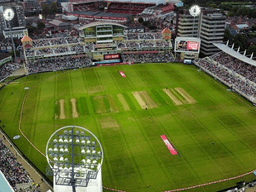
Trent Bridge, Nottingham
IndiaMatch analysis
Select a section to explore the available match analysis.











| IND | ENG | Winner | Series | Match | Date | Ground | MOTM |
|---|---|---|---|---|---|---|---|
| 190/7 (Balls 120) | 191/6 (Balls 114) | ENG | India tour of England T20I Series, 2026 | Match 2, T20I | 04-07-2026 | Old Trafford, Manchester | Jacob Bethell |
| 189/7 (Balls 120) | 0/0 (Balls 0) | No Result | India tour of England T20I Series, 2026 | Match 1, T20I | 01-07-2026 | Riverside Ground, Chester-le-Street | NA |
| 253/7 (Balls 120) | 246/7 (Balls 120) | IND | ICC Men's T20I World Cup, 2026 | Match 54, SemiFinal2 | 05-03-2026 | Wankhede Stadium, Mumbai | Sanju Samson |
| 247/9 (Balls 120) | 97/10 (Balls 63) | IND | England Tour of India T20I Series | Match 5, T20I | 02-02-2025 | Wankhede Stadium, Mumbai | Abhishek Sharma |
| 181/9 (Balls 120) | 166/10 (Balls 118) | IND | England Tour of India T20I Series | Match 4, T20I | 31-01-2025 | Maharashtra Cricket Association Stadium, Pune | Shivam Dube |
Player statistics
Statistics based on the teams’ last five T20Is since 2020
Average Scores
Wickets
Winning Percentage
Venue records
| First-Inning | Second-Inning | Winner | Series | Match | Date | MOTM |
|---|---|---|---|---|---|---|
| ENG: 0/0 (Balls 0) | SA: 0/0 (Balls 0) | No Result | South Africa tour of England T20I Series, September 2025 | Match 3, T20I | 14-09-2025 | NA |
| ENG: 175/8 (Balls 120) | NZ: 179/4 (Balls 104) | NZ | New Zealand tour of England | Match 4, T20I | 05-09-2023 | Mitchell Santner |
| ENG: 215/7 (Balls 120) | IND: 198/9 (Balls 120) | ENG | India tour of England | Match 3, T20I | 10-07-2022 | Reece Topley |
| PAK: 232/6 (Balls 120) | ENG: 201/10 (Balls 116) | PAK | Pakistan tour of England, 2021 | Match 1, T20I | 16-07-2021 | Shaheen Shah Afridi |
Recent Performances
Top Performers
In teams’ last five T20Is













England vs India Match Preview
Pre-match context and key talking points.
England and India head to Trent Bridge in Nottingham for the third T20I of the India tour of England series on 7 July 2026, with the contest nicely poised after England’s chase at Old Trafford in the second game. With the opening match washed out after India posted 189 for 7, the series has already produced one rain interruption and one high-scoring finish, and Trent Bridge looks well placed to deliver another match in a similar vein.
That is part of what makes this fixture so compelling. England come in with the immediate lift of having reeled in 191 on 4 July 2026, while India are trying to halt a run of defeats that has stretched across this England leg and the preceding trip to Ireland. On a ground known for pace in the air as well as quick scoring, the balance between England’s confidence and India’s need for a response should shape the evening.
Conditions & Venue
Trent Bridge’s T20I numbers point clearly toward runs. The average first-innings score at the venue stands at 207, while the average second-innings score is 193, which underlines how often games here move at a brisk tempo. Two of the three completed results in the available sample were won by the side batting first, giving defending teams a modest edge, though not an overwhelming one.
The recent matches at the ground reinforce that sense of opportunity for batters. England made 215 for 7 against India here on 10 July 2022 and still needed to stay sharp with the ball as India reached 198 for 9 in reply. A year earlier, Pakistan posted 232 for 6 against England on 16 July 2021, a total that proved too much despite England responding with 201. Those are not isolated low-scoring outliers dressed up as trends; they fit the broader average and the venue’s reputation for true bounce and short boundaries.
At the same time, this is not simply a batting strip without consequence for bowlers. Fast bowlers have accounted for 24 wickets in the sample, compared to 15 for slower bowlers, which suggests seamers have had the greater influence. That aligns with Trent Bridge’s capacity to reward movement, especially when conditions offer a bit of help in the air. The challenge for both teams will be to exploit that assistance early without losing control once the surface settles and the boundary options open up.
Team Form & Head-to-Head
England’s recent T20I form reads better than India’s heading into Nottingham. They have won three of their last five completed T20Is, including back-to-back victories over Pakistan and New Zealand at the 2026 T20 World Cup before pushing India hard in the semi-final despite conceding 253 for 7. Most significantly for this series, they chased 190 against India in Manchester with six wickets down and an over to spare, an effort that underlined both their depth and their willingness to keep attacking deep into the innings.
India’s sequence is more uneven. Their last five T20Is include the World Cup final win over New Zealand on 8 March 2026, but either side of that high point they have lost to Ireland twice and then slipped against England in Manchester. The scores still suggest batting resources remain intact: 189 for 7 in Chester-le-Street, 190 for 7 in Manchester and 255 for 5 in the World Cup final are not the returns of a side short on stroke-makers. The issue has been converting those totals into control over games.
The recent head-to-head pattern slightly favours India over a longer stretch, but England have gained ground in 2026. India won the World Cup semi-final between these sides on 5 March 2026 after piling up 253 for 7, and they had also won the two most recent meetings in India in January and February 2025. But England’s chase in Manchester has changed the immediate mood, especially because it came after India had already put up another substantial first innings.
That sequence also says something important about this matchup: totals alone have not guaranteed safety. Three of the last five meetings have seen scores of 181 or more in the first innings, and two of them went well beyond 240. Even when bowlers have produced decisive individual spells, this rivalry has lately been driven by batting firepower and the ability to handle pressure in the middle and closing overs.
Players to Watch
Jacob Bethell has quickly become central to England’s recent success against India. His 76 from 46 balls in the second T20I on 4 July 2026 set up the chase in Manchester, and that followed an even more striking 105 from 48 balls in the T20 World Cup semi-final in Mumbai on 5 March 2026. Those innings were not one-off cameos; they show a batter who has repeatedly found a way to impose himself on this attack. India will also note that he has handled several of their spin options well, scoring freely against Varun Chakravarthy and Ravi Bishnoi in the available matchups.
Sam Curran offers England a different kind of value. His three wickets in Manchester were important in restricting India to 190 rather than something more imposing, and his record against specific Indian batters stands out. He has dismissed Abhishek Sharma twice in just six balls and has also had success against Ishan Kishan and Shivam Dube. On a ground where seamers have taken a larger share of wickets, Curran’s left-arm angle could again be influential.
Saqib Mahmood is another England bowler worth watching after his three-for in the first T20I at Chester-le-Street on 1 July 2026. His matchup record is especially striking against Sanju Samson and Tilak Varma, both of whom he has dismissed twice in limited exchanges. Trent Bridge can reward pace that hits good lengths, and Mahmood has shown he can be a wicket-taking option against this batting group.
For India, Abhishek Sharma remains a major threat despite the result in Manchester. He blasted 59 from 24 balls in the opening game of the series and has a substantial body of work against England, including 135 from 54 balls in Mumbai on 2 February 2025 and 79 from 34 balls in Kolkata on 22 January 2025. He has scored quickly against several England bowlers, notably Jofra Archer and Saqib Mahmood, and can alter the shape of the powerplay in a handful of overs.
Arshdeep Singh may be just as important with the ball. He claimed three wickets in the second T20I, and his record against Phil Salt is particularly notable: three dismissals while conceding only 18 runs in 19 balls. On a surface where pace has had the stronger statistical footprint, Arshdeep’s left-arm variety and ability to strike early could be vital for India’s attempt to stop England from dictating the chase or the start of an innings.
Varun Chakravarthy gives India a contrasting route into the game. Although the venue numbers lean toward seam, his record against England’s leading batters is strong. He has dismissed Jos Buttler four times while conceding only 19 runs in 20 balls, and he has also removed Harry Brook three times. If Trent Bridge turns into another run-heavy contest, India’s need for middle-overs control could make his spell one of the defining passages.
Final Word
The shape of this match is easy to identify even if the result is not. Trent Bridge has the profile of a high-scoring venue, England arrive with momentum from a successful chase, and India still possess enough batting to make any total feel vulnerable. The key questions may come down to which side handles the new ball better and which attack executes more cleanly when the scoring rate rises.
England’s recent edge has come from their ability to keep pace with big targets and find impact performances from players such as Bethell and Curran. India, meanwhile, need their strong top-order starts to be backed by greater control with the ball, whether through Arshdeep’s early strikes or Varun Chakravarthy’s grip through the middle overs. With recent meetings between these sides producing heavy scoring and dramatic swings, Trent Bridge looks set for another engrossing chapter.
Playing XI
Confirmed players selected for this match.


Match News
Recent news and updates related to this match.