 England
 New ZealandEngland
New Zealand tour of England Test Series, 2026
ENGvsNZ
Test · Match 2
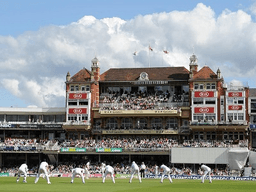
Kennington Oval, London
New ZealandMatch analysis
Select a section to explore the available match analysis.











| ENG | NZ | Winner | Series | Match | Date | Ground | MOTM |
|---|---|---|---|---|---|---|---|
| 140/10 (Balls 238) & 226/10 (Balls 336) | 113/10 (Balls 179) & 138/10 (Balls 243) | ENG | New Zealand tour of England Test Series, 2026 | Match 1, Test | 04-06-2026 | Lord's, London | Ollie Robinson |
| 143/10 (Balls 214) & 234/9 (Balls 284) | 347/10 (Balls 583) & 453/10 (Balls 610) | NZ | England tour of New Zealand Test Series, 2024 | Match 3, Test | 14-12-2024 | Seddon Park, Hamilton | Mitchell Santner |
| 280/10 (Balls 328) & 427/6 (Balls 495) | 125/10 (Balls 209) & 259/10 (Balls 326) | ENG | England tour of New Zealand Test Series, 2024 | Match 2, Test | 06-12-2024 | Basin Reserve, Wellington | Harry Brook |
| 499/10 (Balls 618) & 104/2 (Balls 76) | 348/10 (Balls 546) & 254/10 (Balls 445) | ENG | England tour of New Zealand Test Series, 2024 | Match 1, Test | 28-11-2024 | Hagley Oval, Christchurch | Brydon Carse |
| 435/8 (Balls 523) & 256/10 (Balls 446) | 209/10 (Balls 320) & 483/10 (Balls 975) | NZ | England tour of New Zealand Test Series, 2023 | Match 2, Test | 24-02-2023 | Basin Reserve, Wellington | Kane Williamson |
Player statistics
Statistics based on the teams’ last five Tests since 2020
Average Scores
Wickets
Winning Percentage
Venue records
| First-Inning | Second-Inning | Third-Inning | Fourth-Inning | Winner | Series | Match | Date | MOTM |
|---|---|---|---|---|---|---|---|---|
| IND: 224/10 (Balls 418) | ENG: 247/9 (Balls 308) | IND: 396/10 (Balls 528) | ENG: 367/10 (Balls 511) | IND | India tour of England Test Series, 2025 | Match 5, Test | 31-07-2025 | Mohammed Siraj |
| ENG: 325/10 (Balls 415) | SL: 263/10 (Balls 368) | ENG: 156/10 (Balls 203) | SL: 219/2 (Balls 243) | SL | Sri Lanka tour of England Test Series, 2024 | Match 3, Test | 06-09-2024 | Pathum Nissanka |
| ENG: 283/10 (Balls 328) | AUS: 295/10 (Balls 619) | ENG: 395/9 (Balls 486) | AUS: 334/10 (Balls 568) | AUS | The Ashes, 2023 | Match 5, Test | 27-07-2023 | Chris Woakes |
| AUS: 469/10 (Balls 729) | IND: 296/10 (Balls 418) | AUS: 270/8 (Balls 507) | IND: 234/10 (Balls 381) | AUS | ICC World Test Championship, 2023 | Match Final, Test | 07-06-2023 | Travis Head |
| SA: 118/10 (Balls 218) | ENG: 158/10 (Balls 218) | SA: 169/10 (Balls 338) | ENG: 130/1 (Balls 135) | ENG | South Africa tour of England Test Series, 2022 | Match 3, Test | 08-09-2022 | Ollie Robinson |
Recent Performances
Top Performers
In teams’ last five Tests



England vs New Zealand Match Preview
Pre-match context and key talking points.
England and New Zealand head to the Kennington Oval for the second Test of the New Zealand tour of England on 17 June 2026, with the series moving to London after a sharp, low-scoring opening contest at Lord's. England took that first Test, dismissing New Zealand twice for 113 and 138 after being bowled out for 140 themselves in the first innings, and they now arrive at a venue that has produced a varied mix of results since 2022.
The Oval carries its own long history, but the more immediate point for this match is that it has not followed one rigid script in recent Test cricket. There have been attritional games, collapses, and one major first-innings score, which should make this an intriguing follow-up to a series that has already begun with the ball dominating.
Conditions & Venue
The recent numbers at the Oval suggest a ground that offers opportunity without guaranteeing comfort for batters. Across the last five Tests here since 2022, the average first-innings score is 284, dropping to 252 in the second innings. That points to a surface where runs are possible but not automatic, particularly against disciplined seam bowling.
The split in wicket-taking also reinforces that impression. Fast bowlers have taken 45 wickets to 22 for slow bowlers in that sample, which underlines the importance of new-ball control and sustained seam pressure. That does not mean spin is irrelevant, but the faster bowlers have had the heavier influence.
There is also a modest trend in favour of the side bowling first, with chasing teams winning three of the last five Tests here, compared to two victories for sides batting first. That statistic is not overwhelming on its own, but it does suggest the Oval has not been a ground where simply getting first use of the surface has ensured control.
Two recent matches capture the range of conditions. In September 2022, England beat South Africa after first-innings totals of 118 and 158, a match dominated by bowlers from the outset. By contrast, the World Test Championship final in June 2023 began with Australia posting 469, showing that if a side gets through the early phases, there are runs to be had on this ground.
For both teams, then, the challenge looks twofold: survive the opening burst, and then cash in. The Oval can reward proper batting, but the numbers say that pace remains the first and most decisive factor.
Team Form & Head-to-Head
England's last five Tests have produced two wins and three defeats, but the sequence needs context. Three of those losses came in Australia during the 2025 Ashes, while the wins included the Boxing Day Test in Melbourne in December 2025 and the series opener against New Zealand at Lord's in June 2026. What stands out is that England have remained capable of forcing results even in difficult scoring conditions. Their victory at Lord's, where neither side made 250 in an innings, was built on bowling pressure and enough lower-order resistance to create separation.
New Zealand, meanwhile, had entered this series on a stronger run, with three wins in their previous four Tests before Lord's. They beat Ireland in Belfast in May 2026 and had enjoyed a productive home series against West Indies in December 2025, including scores of 575 for 8 and 490 for 8 in two of those matches. The opening Test in London, however, was a reminder that their batting can be put under severe pressure when the seamers are allowed to dictate terms.
The recent head-to-head record between these sides has been competitive but slightly tilted England's way. In the last five Tests between them since 2023, England have won three and New Zealand two. England also won two of the three Tests in New Zealand in late 2024, including a strong performance at Wellington where they piled up 427 for 6 in the second innings after making 280 first up. New Zealand's emphatic response came at Hamilton later in December 2024, when they won after posting 347 and 453.
That spread of results suggests there is no persistent psychological edge here. England have found ways to outplay New Zealand, but New Zealand have also shown they can dominate this matchup when their batting gets ahead of the game. After Lord's, the immediate question is whether New Zealand can stretch England's attack for longer periods, because once England were able to keep the game compressed, they controlled it.
Players to Watch
Joe Root remains central to England's prospects, both as captain and as the batter with the clearest record of substantial scores in this fixture. Against New Zealand, he has produced innings of 153 and 95 at Wellington in February 2023 and another century there in December 2024. Even though those runs came away from home, they underline his ability to shape this contest when he settles in.
Jacob Bethell is another important figure for England. His 154 at Sydney in January 2026 showed his capacity for long-form innings against high-quality opposition, and his record against New Zealand already includes 96, 76 and 50 across the 2024 series in New Zealand. That gives England a player with evidence of comfort in this matchup, and with the additional value of slow left-arm spin if conditions bring it into the game.
England's seam attack will again attract most of the attention. Josh Tongue comes into focus after taking five wickets in Melbourne in December 2025 and following that with a five-wicket match contribution against New Zealand at Lord's, including 3 for 40 in the first New Zealand innings. Jofra Archer's top recent return of 5 for 53 against Australia at Adelaide in December 2025 is another reminder of the pace England can call on when conditions assist.
For New Zealand, Nathan Smith emerged from the first Test with real impact. He took 3 wickets in England's first innings and then 6 for 70 in the third innings at Lord's, performances that nearly kept New Zealand in the contest despite the defeat. He had also taken 6 for 40 against Ireland in Belfast in May 2026, so this is not a one-off spike but part of a productive stretch.
Kyle Jamieson is equally significant after his 5 for 62 in England's first innings at Lord's. At a venue where fast bowlers have had the larger say, his ability to extract bounce and maintain pressure could be especially relevant. New Zealand will also look to Devon Conway and Rachin Ravindra for greater batting substance. Conway's double hundred against West Indies at Mount Maunganui in December 2025 and Ravindra's 121 against Ireland in May 2026 show both have the range to build long innings, which New Zealand badly need after being dismissed cheaply twice in the opener.
Final Word
The Oval's recent pattern points to a match likely to be shaped first by seam bowling and then by whichever batting group adapts better once the initial movement fades. England come in with the immediate confidence of a win at Lord's and a slightly stronger recent record in this rivalry, but New Zealand have enough evidence from the past year to suggest they are capable of a much fuller batting display than they managed in the first Test.
First-innings runs look especially important. The ground has allowed both collapses and substantial totals, and that makes the opening exchanges with the new ball crucial. If England's seamers reproduce the pressure they created at Lord's, they can keep New Zealand under strain again. If New Zealand's fast bowlers, led by Smith and Jamieson, strike as they did in the series opener, this could become another tight contest where no score feels secure for long.
That uncertainty is what gives the second Test its edge. At a venue with true bounce, seam influence and no single recent pattern, both sides have reasons to believe they can impose themselves.
Playing XI
Confirmed players selected for this match.


Match News
Recent news and updates related to this match.