 India
India AfghanistanIndia
Afghanistan tour of India ODI Series, 2026
INDvsAFG
ODI · Match 1
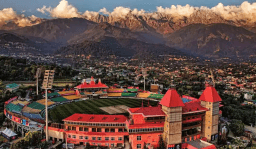
Himachal Pradesh Cricket Association Stadium, Dharamsala
AfghanistanMatch analysis
Select a section to explore the available match analysis.










| AFG | IND | Winner | Series | Match | Date | Ground | MOTM |
|---|---|---|---|---|---|---|---|
| 272/8 (Balls 300) | 273/2 (Balls 210) | IND | ICC Men's ODI Cricket World Cup | Match 9, ODI | 11-10-2023 | The Arun Jaitley Stadium, Delhi | Rohit Sharma |
Player statistics
Statistics based on the teams’ last five ODIs since 2020
Average Scores
Wickets
Winning Percentage
Venue records
| First-Inning | Second-Inning | Winner | Series | Match | Date | MOTM |
|---|---|---|---|---|---|---|
| AUS: 388/10 (Balls 296) | NZ: 383/9 (Balls 300) | AUS | ICC Men's ODI Cricket World Cup | Match 27, ODI | 28-10-2023 | Travis Head |
| NZ: 273/10 (Balls 300) | IND: 274/6 (Balls 288) | IND | ICC Men's ODI Cricket World Cup | Match 21, ODI | 22-10-2023 | Mohammed Shami |
| NED: 245/8 (Balls 258) | SA: 207/10 (Balls 257) | SA | ICC Men's ODI Cricket World Cup | Match 15, ODI | 17-10-2023 | Scott Edwards |
| ENG: 364/9 (Balls 300) | BAN: 227/10 (Balls 290) | ENG | ICC Men's ODI Cricket World Cup | Match 7, ODI | 10-10-2023 | Dawid Malan |
| AFG: 156/10 (Balls 224) | BAN: 158/4 (Balls 208) | BAN | ICC Men's ODI Cricket World Cup | Match 3, ODI | 07-10-2023 | Mehidy Hasan Miraz |
Recent Performances
Top Performers
In teams’ last five ODIs



India vs Afghanistan Match Preview
Pre-match context and key talking points.
India and Afghanistan begin the Afghanistan tour of India ODI Series, 2026 with the opening match at the Himachal Pradesh Cricket Association Stadium in Dharamsala on 13 June. For India, it is a chance to reset after a mixed run across their last two home ODI assignments. For Afghanistan, it is another opportunity to test a side that has shown in 2025 that it can compete strongly in the format, especially when its core performers fire together.
Dharamsala adds its own character to the contest. The HPCA Stadium is among the more distinctive venues in India, not only because of its setting but also because of conditions that can reward fast bowlers early before offering batters value once they settle. That balance should make for an intriguing start to the series.
Conditions & Venue
The numbers at Dharamsala point to a venue where substantial totals are possible, but where batting is rarely straightforward throughout an innings. Across the last five ODIs at the ground since 2020, the average first-innings score is 285, while the average second-innings score drops to 250. That suggests teams batting first have generally had the chance to build competitive totals, though the chasing side has still won three of those five matches.
That split underlines the dual nature of the surface. The ground overview points to pace and bounce, particularly with the new ball, and the wicket distribution supports that: fast bowlers have claimed 52 wickets in those five matches, compared to 30 for slow bowlers. For seamers able to use Dharamsala’s carry and movement, there is a clear opportunity to shape the match early.
At the same time, the venue is not automatically low-scoring. The 2023 World Cup match between Australia and New Zealand was a reminder of just how quickly runs can come once batters adapt, with Australia making 388 and New Zealand replying with 383 in a high-scoring thriller. In contrast, Afghanistan’s own 2023 World Cup outing here ended in a collapse to 156 against Bangladesh, showing how costly a poor start can be at this ground.
There is enough evidence, then, to suggest that the powerplay could be decisive. Teams that weather the early seam movement can cash in later, particularly with the quick outfield and true carry. The slight edge in chasing results at the venue also indicates that targets can be manageable when conditions remain stable, but only if the top order prevents early damage.
Team Form & Head-to-Head
India’s last five ODIs present an uneven picture. They have won two and lost three, with all five matches producing notable totals. In December 2025, they chased 271 comfortably against South Africa in Visakhapatnam, finishing with nine wickets in hand after Yashasvi Jaiswal’s hundred set up a commanding win. Earlier in that same series, though, even 358 for 5 was not enough in Raipur as South Africa overhauled the target.
The New Zealand series in January 2026 followed a similar pattern. India began with a chase of 306 in Vadodara, but then suffered back-to-back defeats, including a loss in Rajkot where 284 proved insufficient and another in Indore where they were bowled out for 296 in pursuit of 337. The common thread is that India have remained capable of putting up or chasing strong scores, but have not always found enough control with the ball when matches have opened up.
Afghanistan, by contrast, come into this game with stronger immediate momentum. They have won four of their last five ODIs, with the only non-win being the no-result against Australia in the ICC Champions Trophy in February 2025. Their October 2025 series against Bangladesh was especially impressive: they won all three matches, defending 190 in one game and then routing Bangladesh for just 93 after posting 293 in the final ODI.
That run says plenty about Afghanistan’s flexibility. They have shown they can defend middling totals through disciplined bowling, but they have also demonstrated enough batting substance to post match-winning scores. Their win over England in Lahore in February 2025 was perhaps the clearest example of that balance, as 325 for 7 was backed up by a successful defence against a strong chase.
The most recent ODI between these teams came at the 2023 World Cup in Delhi, when India chased down Afghanistan’s 272 with eight wickets in hand. Rohit Sharma’s 131 led that pursuit, while Afghanistan still took positives from contributions by Hashmatullah Shahidi and Azmatullah Omarzai in the first innings. India were the more emphatic side on that occasion, but Afghanistan’s broader ODI growth since then gives this meeting a different texture.
Players to Watch
For India, Rohit Sharma remains central to the batting conversation. His 131 against Afghanistan in Delhi in 2023 came at high tempo and effectively settled that chase, and he also made 75 against South Africa in Visakhapatnam in December 2025. Against an attack led by Rashid Khan, Rohit’s ability to set the tone at the top will be important, especially at a venue where early momentum can change the shape of an innings.
Yashasvi Jaiswal is another significant figure in India’s top order. His 116 against South Africa in December 2025 was the standout innings of India’s recent ODI run, and it showed he can build a substantial innings rather than simply provide early impetus. On a surface where batters may need to negotiate movement before expanding, that composure could be valuable.
With the ball, Kuldeep Yadav and Prasidh Krishna look especially relevant to Dharamsala’s demands. Kuldeep’s role in the middle overs is familiar, and he arrives with a four-wicket return against South Africa in December 2025 among his recent highlights. He also dismissed Hashmatullah Shahidi in the 2023 meeting with Afghanistan, while keeping a tight rein on several of their middle-order batters. Prasidh, meanwhile, offers the kind of pace and bounce that the venue often rewards. His recent returns include four wickets against South Africa and two against New Zealand, making him an important option if India are to make the most of the new ball.
Afghanistan’s batting will revolve significantly around Ibrahim Zadran. His 177 against England in February 2025 was one of the outstanding ODI innings in their recent history, and he followed it with back-to-back 95s against Bangladesh in October 2025. He gives Afghanistan the sort of top-order stability needed at a venue where early wickets can put a side under pressure.
Azmatullah Omarzai is the all-rounder who can influence multiple phases. He was vital in Afghanistan’s win over England, contributing both runs and a five-wicket haul in February 2025, and he also produced strong all-round returns against Bangladesh in October 2025. Against India in 2023, he made 62, showing that he can absorb pressure against this opposition as well.
Then there is Rashid Khan, who remains Afghanistan’s most proven wicket-taking threat. He took two wickets in the 2023 World Cup meeting with India and arrives after an outstanding October 2025 series against Bangladesh, including a five-for and two more three-wicket hauls. If the surface slows at any stage, his control and penetration could become central to Afghanistan’s hopes.
Bilal Sami is another name worth watching after his five-wicket performance against Bangladesh in October 2025. At a venue where seamers have had a stronger impact than spinners overall, Afghanistan will hope their pace resources can complement the spin threat rather than leave all the burden on Rashid.
Final Word
This looks like a contest shaped by two intersecting themes: Dharamsala’s seam-friendly early conditions and the contrasting recent patterns of the two sides. India still have the batting strength to dominate at home, but their recent ODI results show they have not always controlled matches once scores have risen. Afghanistan arrive with better short-term form and with several players, led by Ibrahim Zadran, Azmatullah Omarzai and Rashid Khan, carrying strong individual returns.
The key areas are clear enough. New-ball bowling could decide how much each batting unit is allowed to settle. The side that handles the first ten overs better should gain significant control, and middle-overs management against spin could then become the next major battleground. With Dharamsala capable of producing both collapses and run-fests, the opening match of the series has the ingredients for a finely balanced ODI.
Playing XI
Confirmed players selected for this match.


Match News
Recent news and updates related to this match.