 India
India AfghanistanIndia
Afghanistan tour of India ODI Series, 2026
INDvsAFG
ODI · Match 3
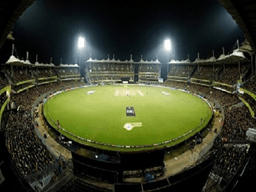
M. A. Chidambaram Stadium, Chennai
AfghanistanMatch analysis
Select a section to explore the available match analysis.











| IND | AFG | Winner | Series | Match | Date | Ground | MOTM |
|---|---|---|---|---|---|---|---|
| 402/10 (Balls 299) | 232/9 (Balls 267) | IND | Afghanistan tour of India ODI Series, 2026 | Match 2, ODI | 17-06-2026 | Ekana International Cricket Stadium, Lucknow | Shubman Gill |
| 195/3 (Balls 137) | 194/10 (Balls 149) | IND | Afghanistan tour of India ODI Series, 2026 | Match 1, ODI | 13-06-2026 | Himachal Pradesh Cricket Association Stadium, Dharamsala | Shubman Gill |
| 273/2 (Balls 210) | 272/8 (Balls 300) | IND | ICC Men's ODI Cricket World Cup, 2023 | Match 9, ODI | 11-10-2023 | The Arun Jaitley Stadium, Delhi | Rohit Sharma |
Player statistics
Statistics based on the teams’ last five ODIs since 2020
Average Scores
Wickets
Winning Percentage
Venue records
| First-Inning | Second-Inning | Winner | Series | Match | Date | MOTM |
|---|---|---|---|---|---|---|
| PAK: 270/10 (Balls 280) | SA: 271/9 (Balls 284) | SA | ICC Men's ODI Cricket World Cup, 2023 | Match 26, ODI | 27-10-2023 | Tabraiz Shamsi |
| PAK: 282/7 (Balls 300) | AFG: 286/2 (Balls 294) | AFG | ICC Men's ODI Cricket World Cup, 2023 | Match 22, ODI | 23-10-2023 | Ibrahim Zadran |
| NZ: 288/6 (Balls 300) | AFG: 139/10 (Balls 208) | NZ | ICC Men's ODI Cricket World Cup, 2023 | Match 16, ODI | 18-10-2023 | Glenn Phillips |
| BAN: 245/9 (Balls 300) | NZ: 248/2 (Balls 257) | NZ | ICC Men's ODI Cricket World Cup, 2023 | Match 11, ODI | 13-10-2023 | Lockie Ferguson |
| AUS: 199/10 (Balls 297) | IND: 201/4 (Balls 248) | IND | ICC Men's ODI Cricket World Cup, 2023 | Match 5, ODI | 08-10-2023 | KL Rahul |
Recent Performances
Top Performers
In teams’ last five ODIs




India vs Afghanistan Match Preview
Pre-match context and key talking points.
India and Afghanistan head to Chennai for the third ODI of the Afghanistan tour of India ODI Series, 2026, with the match set for 20 June at the M. A. Chidambaram Stadium. After India’s wins in Dharamsala on 13 June 2026 and Lucknow on 17 June 2026, the focus now shifts to Chepauk, a venue that has offered a distinct pattern in one-day cricket and could shape the tempo of this contest in a very different way.
India come into the game with strong batting returns in this series and enough bowling control to have kept Afghanistan in check across both matches. Afghanistan, though, have enough recent ODI evidence of their own to suggest they remain a competitive side, particularly when key contributors at the top and through the middle overs click together. With Chennai historically rewarding disciplined chasing and with both teams carrying a few significant individual match-ups into the game, there is still plenty to watch despite India’s advantage in the opening two matches.
Conditions & Venue
Chepauk’s recent ODI numbers point clearly in one direction: chasing has held a major edge. Across the last five ODIs at the venue since 2020, teams batting second have won four times, while batting first has produced only one win. That trend is reinforced by the scoring pattern, with the average first-innings total at 257 and the average second-innings score at 229. Those numbers suggest that while the surface can produce workable totals, the conditions have often allowed the side batting second to manage the chase effectively.
Two results from the 2023 World Cup at this ground illustrate that pattern well. On 23 October 2023, Afghanistan chased down 282 against Pakistan, finishing on 286/2 in a commanding effort. Earlier in the tournament, on 8 October 2023, India successfully pursued 199 against Australia, reaching 201/4. Those examples do not suggest every game at Chepauk becomes a run-fest, but they do underline that targets have been gettable when the chase is paced properly.
There is also a useful bowling indicator in the wicket split. Fast bowlers have taken 44 wickets in those five matches, compared to 25 for slow bowlers. That does not rule spin out of the contest, especially at a venue with such a strong cricketing identity, but the recent ODI evidence shows pace has had the greater statistical influence. For both sides, that places extra value on new-ball control and the ability of the quicker bowlers to break partnerships before the middle overs settle down.
Team Form & Head-to-Head
India’s last five ODIs have produced three wins and two defeats, but the more immediate picture is stronger than that broader record. They have won their last two matches in this series, and they did so in contrasting styles. In Dharamsala on 13 June 2026, the chase was swift and efficient after Afghanistan were bowled out for 194. In Lucknow on 17 June 2026, India put up 402 and then defended it comfortably. That ability to win both with the bat setting the game up and while chasing adds to the sense of control they have shown in this series.
Afghanistan’s last five ODIs tell a more mixed story. Before these two defeats to India, they had put together three straight wins against Bangladesh in Abu Dhabi in October 2025. Those victories included both a successful chase and two emphatic defenses, showing that this side is capable of adapting when its bowling unit takes hold of a game. The issue in this series has been sustaining pressure against India’s top order and recovering once the game has moved away from them.
The recent ODI head-to-head also leans strongly India’s way. India have won all three meetings in the available sequence: in Delhi in the 2023 World Cup, in Dharamsala on 13 June 2026, and in Lucknow on 17 June 2026. The margins and methods have varied, but the consistent theme has been India’s batting strength. They chased 273 with authority in 2023, hunted down 195 with ease in the first ODI of this series, and then piled up 402 in the second. Afghanistan have still had notable contributions in these contests, but they have not yet been able to string enough of them together across 100 overs.
Players to Watch
Shubman Gill is the obvious starting point for India. He has been the defining batter of the series so far, following 84 in Dharamsala on 13 June 2026 with 154 in Lucknow on 17 June 2026. That pair of innings gives him a powerful recent record against this opposition, and the head-to-head data also shows he has handled several Afghanistan bowlers well. His returns against AM Ghazanfar, Mohammad Saleem and Rashid Khan all point to a batter who has been able to keep control even against varied attacks.
Ishan Kishan adds another layer of threat. His 125 off 79 balls in Lucknow was one of the innings that blew the game open, and his left-handedness gives India a useful change in shape at the top order. Afghanistan have had some success against him through Rashid Khan, who has dismissed him twice, so that duel could be one of the more important subplots if India are again looking to dominate the first half of their innings.
With the ball, Arshdeep Singh and Gurnoor Brar have both made repeated dents in Afghanistan’s batting. Arshdeep followed 2 for 27 in Dharamsala with 3 for 45 in Lucknow, while Gurnoor Brar took three wickets in each of the first two ODIs. On a ground where pace has accounted for the larger share of wickets, their role becomes especially significant.
For Afghanistan, Rahmanullah Gurbaz remains central. His 102 off 51 balls in the first ODI was the clearest reminder that he can alter the tone of an innings quickly. Even in the second ODI, he added 41, and his numbers against some of India’s seamers show that he has been willing to attack rather than retreat. If Afghanistan are to make a stronger batting statement in Chennai, it is hard to see it happening without Gurbaz setting the platform.
Rashid Khan is as important as ever in the middle overs. He took 3 for 48 in Lucknow and has also enjoyed a highly productive ODI stretch against Bangladesh in October 2025, including a five-wicket haul. Against this Indian batting group, Rashid has found ways to dismiss major names, including Rohit Sharma and Ishan Kishan. On a venue where control through the middle can be vital even if pace has led the wicket charts, his overs could determine whether Afghanistan can keep India within reach.
Nangeyalia Kharote is another Afghanistan bowler to watch after his 4 for 76 in the second ODI. That spell came in a difficult match context, but it still showed he could break into a powerful batting effort. Given that he has also dismissed both Shubman Gill and Ishan Kishan in this series, he offers Afghanistan another route into India’s top order.
Final Word
The shape of the game may come down to how much the venue trend matters. Chepauk’s recent ODI history suggests chasing sides have held the upper hand, and that makes toss-time strategy relevant, but only if backed by disciplined execution. India’s top order has been the biggest difference between the teams so far, while Afghanistan’s best route back into the contest may lie in early strikes and sustained middle-overs pressure through bowlers such as Rashid Khan and Nangeyalia Kharote.
For India, the key will be sustaining the authority they have shown through Gill, Kishan and their seam attack. For Afghanistan, it is about turning strong individual performances into a more complete team game. With a venue that has rewarded smart chases and with several important pace-versus-batting match-ups in play, Chennai should provide a fitting stage for the series finale.
Playing XI
Confirmed players selected for this match.


Match News
Recent news and updates related to this match.