 India
India West IndiesIndia
West Indies tour of India ODI Series, 2026
INDvsWI
ODI · Match 1
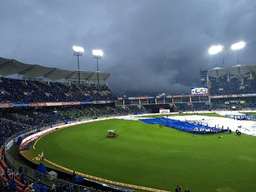
Greenfield International Stadium, Thiruvananthapuram
West IndiesMatch analysis
Select a section to explore the available match analysis.










| IND | WI | Winner | Series | Match | Date | Ground | MOTM |
|---|---|---|---|---|---|---|---|
| 181/10 (Balls 245) | 182/4 (Balls 220) | WI | India tour of West Indies ODI Series, 2023 | Match 2, ODI | 29-07-2023 | Kensington Oval, Bridgetown | Shai Hope |
| 118/5 (Balls 137) | 114/10 (Balls 138) | IND | India tour of West Indies ODI Series, 2023 | Match 1, ODI | 27-07-2023 | Kensington Oval, Bridgetown | Kuldeep Yadav |
Player statistics
Statistics based on the teams’ last five ODIs since 2020
Average Scores
Wickets
Winning Percentage
Venue records
Recent Performances
Top Performers
In teams’ last five ODIs



India vs West Indies Match Preview
Pre-match context and key talking points.
India and West Indies begin the ODI leg of the West Indies tour of India with the opening match at the Greenfield International Stadium in Thiruvananthapuram on 27 September 2026. It is the first game of a three-match series and arrives at an interesting point for both sides. India are returning home after an eventful tour of England, while West Indies come in after a five-match home campaign against New Zealand that showed both their resilience and their fragility.
For India, this is a chance to re-establish their one-day rhythm in familiar conditions after alternating sharply between dominant wins and a pair of defeats in July 2026. For West Indies, the challenge is to carry the positives from their two wins against New Zealand into much tougher away conditions. With both teams featuring captains who are central to their batting plans, the opening game should offer an early indication of which side adapts quicker to the demands of the venue.
Conditions & Venue
Greenfield International Stadium has a reputation for offering a balanced contest. The surface is known to give fast bowlers some help early, particularly through movement and bounce, before slowing down enough for spinners to become influential through the middle overs. That makes the first phase of the innings especially important for top-order batters, while sides that manage the transition from seam-friendly conditions to slower middle-overs cricket tend to stay in control.
The venue’s quick outfield and true bounce also mean there are scoring opportunities once batters settle in. The key, as is often the case here, is patience at the start rather than immediate aggression. Batters who spend time at the crease are usually rewarded, and that could place extra emphasis on the quality of each side’s top order.
Another relevant factor is the scheduled afternoon start in what is a day-night setting. Dew has been noted as a significant influence at this ground, with chasing often considered the more comfortable route when conditions get slick later in the evening. That creates an additional tactical layer around how teams approach the toss and how effectively bowlers execute with a damp ball in the closing stages.
There are no venue averages or recent ODI score patterns available to build a numerical picture, but the broader character of the ground suggests neither side can afford a loose start with bat or ball. Seamers who hit the deck early and spinners who vary pace through the middle overs should both have a role to play.
Team Form & Head-to-Head
India’s last five ODIs have produced three wins and two losses, but the sequence also shows how high their ceiling can be. In June 2026, they overwhelmed Afghanistan in back-to-back home victories, posting 402 in Lucknow on 17 June 2026 before completing a comfortable chase of 219 in Chennai on 20 June 2026. Even in England, where they lost the series, there was evidence of their batting strength: they chased 259 at Edgbaston on 14 July 2026 and still reached 360 for 7 in pursuit of 388 at Lord’s on 19 July 2026.
The concern from India’s perspective is that their returns have swung quite sharply. They were dismissed for 233 in Cardiff on 16 July 2026, and England exposed them in two of the three matches in that series. Still, the broader picture is of a side capable of producing both imposing totals and efficient chases, especially when their top order settles.
West Indies have also split their last five ODIs, winning two and losing three against New Zealand in July 2026. Their victories were substantial in different ways. On 12 July 2026 in Guyana, they chased 268 with authority, finishing on 268 for 3. On 22 July 2026 in Bridgetown, they held their nerve in another chase, reaching 269 for 8 after New Zealand made 268 for 9. Those results underline that this batting group can respond well when a platform is created.
But the defeats reveal a clear vulnerability. West Indies were bowled out for 138, 140 and 188 in three of those losses, which points to inconsistency in the batting unit. Against a stronger attack and in away conditions, avoiding collapses may be their most pressing requirement in this series opener.
The recent ODI head-to-head between these teams is limited here to two matches from the 2023 series in Bridgetown, and it is evenly split. India won the first game on 27 July 2023 after bowling West Indies out for 114, while West Indies responded on 29 July 2023 by chasing 182 with six wickets in hand. Those results suggest a rivalry in which control of the middle overs has mattered, particularly when conditions have not allowed free scoring throughout an innings.
Players to Watch
Shubman Gill carries dual importance for India as captain and top-order batter. His ODI returns in 2026 include 154 against Afghanistan in Lucknow on 17 June, 80 against England at Edgbaston on 14 July and 77 at Lord’s on 19 July. Those scores reinforce his value as both an innings-builder and a tempo-setter. This series also gives him another leadership test, and India will want their captain to shape the batting effort from the front.
Rohit Sharma adds experience and proven match-shaping quality at the top. His 138 against England at Lord’s on 19 July 2026 was the kind of innings that can take a game away quickly once he gets through the opening spell. On a surface where early movement may be available, his judgment in the first ten overs could be especially important.
Yashasvi Jaiswal is another intriguing option for India. His unbeaten 110 off 86 against Afghanistan in Chennai on 20 June 2026 showed the extent of his scoring range, and his left-handedness offers a different look in a largely right-handed top order. If India are looking for momentum once conditions settle, he is well placed to provide it.
With the ball, Prasidh Krishna stands out. His five-wicket haul against Afghanistan in Chennai on 20 June 2026 underlined his ability to exploit bounce and hit awkward lengths, qualities that could be relevant at this venue. He also picked up two wickets each in India’s first and third ODIs against England in July 2026, suggesting he can remain a wicket-taking threat even when conditions are not entirely in the bowlers’ favour.
For West Indies, Shai Hope remains the central figure. The captain made 87 against New Zealand on 12 July 2026 and has encouraging numbers from the 2023 meetings with India, scoring 43 and 63 in the two Bridgetown games. His ability to anchor an innings could be vital at a venue where shot selection early on is likely to matter.
Keacy Carty is another batter India will need to contain. He made 95 against New Zealand on 12 July 2026 and also scored 48 against India on 29 July 2023. He appears comfortable playing a longer innings, something West Indies may need if the new ball asks difficult questions.
Among West Indies bowlers, Gudakesh Motie could have a significant say if the pitch slows through the middle overs. He took 5 for 47 against New Zealand in Bridgetown on 19 July 2026 and also troubled India in 2023, returning figures of 2 for 26 and 3 for 36 in the two ODIs. His matchup against India’s right-hand-heavy batting could be one of the game’s key subplots.
Alzarri Joseph gives West Indies their leading pace threat. His 4 for 41 against New Zealand on 12 July 2026 was a reminder of his ability to strike with the new ball, and he also picked up two wickets against India in Bridgetown on 29 July 2023. If there is assistance for seamers early in Thiruvananthapuram, he becomes a major factor.
Final Word
The opening ODI looks set to be shaped by adaptation. India bring the stronger recent body of work, particularly in terms of their capacity to post or chase substantial totals, but West Indies have already shown in July 2026 that they can win tight chases and that their leading players can stand up against quality opposition.
At a venue expected to reward discipline early and smart middle-overs management later, the decisive themes are clear: how well India’s top order handles West Indies’ seam and spin combination, whether West Indies can avoid the batting stumbles that hurt them against New Zealand, and which side controls the game once the surface begins to slow. With Gill and Hope central to their teams’ plans, and with bowlers like Prasidh Krishna, Motie and Alzarri Joseph capable of shifting momentum, the first match has all the ingredients of a finely balanced start to the series.
Match News
Recent news and updates related to this match.