 India
India West IndiesIndia
West Indies tour of India ODI Series, 2026
INDvsWI
ODI · Match 2
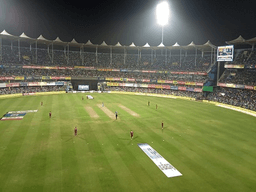
Dr. Bhupen Hazarika Cricket Stadium, Guwahati
West IndiesMatch analysis
Select a section to explore the available match analysis.











| WI | IND | Winner | Series | Match | Date | Ground | MOTM |
|---|---|---|---|---|---|---|---|
| 295/7 (Balls 300) | 300/2 (Balls 250) | IND | West Indies tour of India ODI Series, 2026 | Match 1, ODI | 27-09-2026 | Greenfield International Stadium, Thiruvananthapuram | Kuldeep Yadav |
| 182/4 (Balls 220) | 181/10 (Balls 245) | WI | India tour of West Indies ODI Series, 2023 | Match 2, ODI | 29-07-2023 | Kensington Oval, Bridgetown | Shai Hope |
| 114/10 (Balls 138) | 118/5 (Balls 137) | IND | India tour of West Indies ODI Series, 2023 | Match 1, ODI | 27-07-2023 | Kensington Oval, Bridgetown | Kuldeep Yadav |
Player statistics
Statistics based on the teams’ last five ODIs since 2020
Average Scores
Wickets
Winning Percentage
Venue records
Recent Performances
Top Performers
In teams’ last five ODIs



India vs West Indies Match Preview
Pre-match context and key talking points.
India and West Indies move to Guwahati for the second ODI of the West Indies tour of India series on 30 September 2026, with the contest set for the Dr. Bhupen Hazarika Cricket Stadium. India arrive with the advantage of a winning start after chasing down 295 in Thiruvananthapuram on 27 September 2026, while West Indies will take encouragement from the fact that they were competitive for long stretches in that opener and posted a total substantial enough to test a strong batting side.
The venue adds a layer of intrigue. Guwahati has built a reputation as one of the more vibrant limited-overs stops in India, and the atmosphere should fit the occasion as the series shifts to the Northeast. For India, this is a chance to build on the authority of their chase in the first match. For West Indies, it is an opportunity to show that their batting display in the opener was not an isolated effort and that they can push the hosts harder across a full game.
Conditions & Venue
There is no recent ODI statistical sample available for the Dr. Bhupen Hazarika Cricket Stadium to build a numbers-driven picture around first-innings averages, chasing trends or the balance between pace and spin. What is clear from the venue’s profile, though, is that it is regarded as a ground with good pitch conditions and a lively surface that generally produces a fair contest between bat and ball.
That makes adaptability especially important. Batters who settle in are likely to trust the surface, while bowlers who vary pace and lengths effectively could still find enough assistance to keep the scoring rate under control. With no recent ODI pattern here to lean on, both sides may have to read conditions quickly on the day rather than arrive with a fixed blueprint shaped by venue history.
The outfield and overall setting also matter in white-ball cricket, and Guwahati has established itself as a modern venue capable of generating strong tempo and energy. In a match where one side has already shown it can chase 300 and the other has shown it can put that kind of score on the board, the quality of execution may matter more than any pre-set assumptions about the surface.
Team Form & Head-to-Head
India’s recent ODI record points to a side that has remained largely effective even with the occasional setback. They have won three of their last five ODIs, including victories against Afghanistan in Chennai on 20 June 2026, England at Edgbaston on 14 July 2026 and West Indies in Thiruvananthapuram on 27 September 2026. The losses to England in Cardiff on 16 July 2026 and at Lord’s on 19 July 2026 came in very different circumstances: one in a modest-scoring game and the other in a high-scoring shootout. That spread suggests India have experienced contrasting ODI scenarios in a short span, which should help them in adjusting to whatever Guwahati presents.
The most significant indicator for the hosts is how emphatically they batted in the series opener. Chasing 296, India finished on 300 for 2 with more than eight overs to spare. That is not just a win; it is evidence of control in pursuit, with the top order taking command once the chase settled.
West Indies, by contrast, have one win in their last five ODIs. Their sequence includes three losses to New Zealand in July 2026 before a recovery win at Bridgetown on 22 July 2026, followed by the defeat in the first ODI of this series. Yet their results also show that they are capable of competing in different kinds of matches. Against New Zealand, they won a chase of 269 in Bridgetown on 22 July 2026, and against India they put up 295 for 7 in the opener. The challenge has been consistency, particularly in sustaining batting output from game to game.
The recent head-to-head record is competitive without being extensive. India won the latest meeting on 27 September 2026, and they also won the first ODI in Bridgetown on 27 July 2023. West Indies answered with a victory in the next match at the same venue on 29 July 2023. That leaves India with two wins from the last three completed ODIs between the teams in this sample, but it also underlines that West Indies have shown they can disrupt India when they put together a disciplined all-round performance.
Players to Watch
For India, Virat Kohli comes into Guwahati after the standout innings of the series so far. His 139 from 88 balls in Thiruvananthapuram on 27 September 2026 turned a stiff chase into a comfortable one, and it was in line with a broader run of meaningful ODI scores that also included 65 against England in Cardiff on 16 July 2026 and 74 at Lord’s on 19 July 2026. Against this West Indies attack, he has handled key bowlers well: he has scored freely against Alzarri Joseph and Gudakesh Motie without losing his wicket.
Shubman Gill, India’s captain, is equally central. His 110 in the first ODI gave the chase structure and tempo, and it continued a productive ODI stretch that has also featured 80 against England at Edgbaston on 14 July 2026 and 77 at Lord’s on 19 July 2026. India’s top order looked settled and assured in the opener, and Gill’s role at the top will again shape the innings.
With the ball, Kuldeep Yadav looms as a major factor. He was the player of the match in the opener for his four wickets, and his record against West Indies in this format is particularly striking. He also claimed four wickets for just six runs in Bridgetown on 27 July 2023. Just as important are the matchups: he has dismissed Shai Hope twice and has also removed John Campbell and Justin Greaves. If the surface offers even modest grip, Kuldeep’s middle-overs control and wicket-taking threat could again define the contest.
Prasidh Krishna offers India another useful point of difference. His two wickets in the first ODI kept pressure on the West Indies middle order, and his five-wicket haul against Afghanistan in Chennai on 20 June 2026 is a reminder of his ability to break games open when he finds rhythm.
For West Indies, Justin Greaves arrives as one of the most encouraging stories from the opener. His 101 from 108 balls was an innings of substance in unfamiliar conditions, and it showed he can bat long enough to anchor the side as well as accelerate when needed. India did eventually get him through Kuldeep, but Greaves’ contribution was the main reason West Indies reached a challenging total.
John Campbell also gave West Indies valuable thrust at the top with 62 from 60 balls in the same match. If he can provide another brisk start, West Indies will have a platform from which their middle order can work.
Shai Hope remains the side’s pivotal figure even though the opener did not bring a major score. As captain and wicketkeeper-batter, he carries strategic weight, and his past returns against India include 63 in Bridgetown on 29 July 2023 and 43 two days earlier. West Indies will want their captain to convert his influence into a longer innings here, especially after Kuldeep has troubled him in this matchup.
With the ball, Gudakesh Motie could be important to West Indies’ hopes of slowing India’s top order. He did not make a major impact in the first match of this series, but his ODI credentials remain evident from his five-wicket haul against New Zealand at Bridgetown on 19 July 2026 and his earlier success against India in 2023, when he picked up three wickets in Bridgetown on 29 July and two more two days before that.
Final Word
The second ODI sets up as a contest between India’s in-form top order and West Indies’ need for more complete control through the middle overs. India have the confidence of a commanding chase behind them, with Kohli, Gill and Kuldeep all carrying strong immediate form into Guwahati. West Indies, however, have enough from the opener to believe they can stretch the hosts again, especially if Greaves, Campbell and Hope can turn starts into a more imposing batting effort and if Motie can find a way to disrupt India’s rhythm.
Much may come down to the same themes that shaped the first game: whether West Indies can contain India after the new ball, and whether India’s bowlers, particularly the spinners, can break partnerships before the visitors build another score in the 290-plus range. With the series now in Guwahati and both sides carrying clear reference points from Thiruvananthapuram, the second ODI has the ingredients for another high-quality examination of control, adaptability and middle-overs execution.
Match News
Recent news and updates related to this match.