 New Zealand
 IndiaNew Zealand
India tour of New Zealand T20I Series, 2026
NZvsIND
T20I · Match 1
Hagley Oval, Christchurch
IndiaMatch analysis
Select a section to explore the available match analysis.










| IND | NZ | Winner | Series | Match | Date | Ground | MOTM |
|---|---|---|---|---|---|---|---|
| 255/5 (Balls 120) | 159/10 (Balls 114) | IND | ICC Men's T20 World Cup, 2026 | Match 55, Final | 08-03-2026 | Narendra Modi Stadium, Ahmedabad | Jasprit Bumrah |
| 271/5 (Balls 120) | 225/10 (Balls 118) | IND | New Zealand tour of India T20I Series, 2026 | Match 5, T20I | 31-01-2026 | Greenfield International Stadium, Thiruvananthapuram | Ishan Kishan |
| 165/10 (Balls 112) | 215/7 (Balls 120) | NZ | New Zealand tour of India T20I Series, 2026 | Match 4, T20I | 28-01-2026 | VDCA Cricket Stadium, Visakhapatnam | Tim Seifert |
| 155/2 (Balls 60) | 153/9 (Balls 120) | IND | New Zealand tour of India T20I Series, 2026 | Match 3, T20I | 25-01-2026 | Dr. Bhupen Hazarika Cricket Stadium, Guwahati | Jasprit Bumrah |
| 209/3 (Balls 92) | 208/6 (Balls 120) | IND | New Zealand tour of India T20I Series, 2026 | Match 2, T20I | 23-01-2026 | Shaheed Veer Narayan Singh International Cricket Stadium, Raipur | Ishan Kishan |
Player statistics
Statistics based on the teams’ last five T20Is since 2020
Average Scores
Wickets
Winning Percentage
Venue records
| First-Inning | Second-Inning | Winner | Series | Match | Date | MOTM |
|---|---|---|---|---|---|---|
| SA: 187/4 (Balls 120) | NZ: 154/8 (Balls 120) | SA | South Africa tour of New Zealand T20I Series, 2026 | Match 5, T20I | 25-03-2026 | Connor Esterhuizen |
| ENG: 236/4 (Balls 120) | NZ: 171/10 (Balls 108) | ENG | England tour of New Zealand T20I Series, 2025 | Match 2, T20I | 20-10-2025 | Harry Brook |
| ENG: 153/6 (Balls 120) | NZ: 0/0 (Balls 0) | No Result | England tour of New Zealand T20I Series, 2025 | Match 1, T20I | 18-10-2025 | NA |
| PAK: 91/10 (Balls 112) | NZ: 92/1 (Balls 61) | NZ | Pakistan tour of New Zealand T20I Series, 2025 | Match 1, T20I | 16-03-2025 | Kyle Jamieson |
| PAK: 134/8 (Balls 120) | NZ: 92/10 (Balls 104) | PAK | Pakistan tour of New Zealand T20I Series, 2024 | Match 5, T20I | 21-01-2024 | Iftikhar Ahmed |
Recent Performances
Top Performers
In teams’ last five T20Is











New Zealand vs India Match Preview
Pre-match context and key talking points.
The opening T20I of the India tour of New Zealand series brings two high-profile sides to Hagley Oval, Christchurch, on 22 October 2026. It is the first match of the contest and it arrives with a useful layer of context: India come in after a high-scoring home series against West Indies earlier in October 2026, while New Zealand return to familiar conditions looking to reset after mixed results across their last two T20I assignments.
There is also fresh history between these teams in 2026. India have had the better of the recent meetings, including victories in the ICC Men’s T20 World Cup final in Ahmedabad on 8 March 2026 and in three of the last four bilateral meetings before that. For New Zealand, the challenge is not only to make home conditions count but also to break a head-to-head pattern that has tilted India’s way.
Conditions & Venue
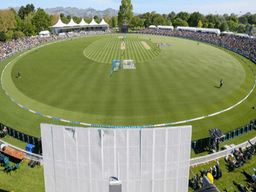
Hagley Oval has offered a balanced but not straightforward T20I surface. The average first-innings score here is 162, while the average second-innings score drops to 127, a gap that underlines how difficult batting can become once a side is under scoreboard pressure. That trend is reinforced by results: 75 percent of completed T20Is in the sample have been won by the team batting first, with only one successful chase.
The ground’s recent matches show that totals can vary sharply, which makes adaptability more important than any fixed template. In March 2026, South Africa posted 187/4 and defended it comfortably against New Zealand, while in October 2025, England surged to 236/4 and left New Zealand well short. Yet the same venue also produced a low-scoring chase in March 2025, when New Zealand overhauled Pakistan’s 91 with ease. The common thread is not simply whether the pitch is flat or difficult, but how decisively the side bowling second can lose control if the first innings gets away from them.
The bowling split also leans toward seam. Fast bowlers have taken 38 wickets in the venue sample, compared to 21 for slow bowlers, which fits Hagley Oval’s reputation as a surface where pace can remain influential even when runs are available. That does not rule out spin, but it does suggest that new-ball discipline and hit-the-deck accuracy could shape the match more directly than middle-overs containment alone.
Team Form & Head-to-Head
New Zealand’s recent five-match sequence is uneven, with one win, one no result and three defeats. Their most encouraging outing came in Mirpur on 2 May 2026, where they chased 104 against Bangladesh after bowling the hosts out for 102. That performance showed control with the ball and composure in a short chase. But the losses around it point to a side still searching for consistency. Bangladesh chased 183 against them in Chattogram on 27 April 2026, while South Africa beat them in successive matches in March 2026, including at this venue.
India’s recent form carries a different feel. Across their last five T20Is, they have two wins, two defeats and one no result, but those results came in games with a far more volatile scoring range. They chased 172 with authority against West Indies in Lucknow on 6 October 2026, and they defended 223 in Indore on 11 October 2026. Their defeats, however, came in shootouts where the bowlers were pushed hard, including West Indies’ chase of 252 in Ranchi on 9 October 2026 and a 247-run concession in Hyderabad on 14 October 2026. India therefore arrive with obvious batting firepower, though their control with the ball will be under scrutiny in a different set of conditions.
The head-to-head numbers from the last five T20Is between the teams strongly favour India, who have won four. That run includes a commanding victory in the World Cup final on 8 March 2026, when they piled up 255/5 before bowling New Zealand out for 159. In the bilateral series in India earlier in 2026, New Zealand did pull off one substantial win, making 215/7 in Visakhapatnam on 28 January and bowling India out for 165. But the broader pattern is of India repeatedly finding bigger scores and applying pressure through the match.
Players to Watch
Mitchell Santner remains central to New Zealand’s hopes. As captain, he brings control and balance, and he has also produced meaningful returns against India in 2026. He made 47 from 27 balls in Raipur on 23 January and 43 from 35 in the World Cup final on 8 March, while his 3 for 26 in Visakhapatnam on 28 January showed how he can still influence a game with the ball against an aggressive Indian batting order. On a venue where seam has had a greater share of wickets, Santner’s value may lie as much in slowing India through the middle overs as in outright domination.
Bevon Jacobs is another intriguing New Zealand option. His 62 from 31 against Bangladesh in Mirpur on 2 May 2026 was a reminder of his finishing power, and he also struck 36 from 19 at Hagley Oval against South Africa in March 2026. New Zealand’s batting has not always sustained momentum through the innings in their recent losses, so a player capable of changing tempo quickly could be significant.
Josh Clarkson offers New Zealand flexibility in both disciplines. He picked up 3 for 9 in just two overs against Bangladesh in Mirpur on 2 May 2026 and also contributed a wicket at Hagley Oval against South Africa. On a ground where pace has played a major role, his medium-fast bowling could add another useful layer to New Zealand’s attack.
For India, Ishan Kishan’s record against New Zealand stands out immediately. He has already hurt them badly in 2026, notably with 103 from 43 in Thiruvananthapuram on 31 January and 76 from 32 in Raipur on 23 January. Even beyond that opposition-specific record, his returns against West Indies in October 2026 suggest he is arriving in useful touch. If India are to make a fast start despite unfamiliar conditions, Kishan is one of their likeliest tone-setters.
Abhishek Sharma is another batter New Zealand will have to contain early. He struck 69 from 30 against West Indies in Indore on 11 October 2026, and his numbers against New Zealand this year are especially striking: 84 from 35 in Nagpur on 21 January, 68 from 20 in Guwahati on 25 January, and 52 from 21 in the World Cup final. He has repeatedly turned this matchup into a powerplay and middle-overs assault.
India’s bowling edge in this contest may rest with Arshdeep Singh and Axar Patel. Arshdeep claimed 5 for 51 against New Zealand in Thiruvananthapuram on 31 January 2026 and followed that opposition record with 3 for 44 against West Indies in Indore on 11 October. His left-arm angle and proven wicket-taking ability against New Zealand’s top order make him a major factor. Axar, meanwhile, took 3 for 27 in the World Cup final and 3 for 33 against New Zealand in Thiruvananthapuram. His matchup record against batters such as Glenn Phillips and Finn Allen also suggests he can be effective once the field spreads.
Final Word
The shape of this match may come down to a familiar T20 tension: India’s batting depth and tempo against New Zealand’s need to use home conditions more precisely than they have in some of their recent defeats. Hagley Oval’s numbers point to the value of setting a total and then letting seamers dictate terms, so the powerplay with bat and ball could be decisive.
India bring the stronger recent head-to-head story and several players with substantial returns in this matchup. New Zealand, though, have enough all-round depth and enough knowledge of the venue to make this a far tighter contest than the broader results column suggests. In Christchurch, the side that reads the conditions quicker and manages the high-pressure phases better should take control of the series from the outset.
Match News
Recent news and updates related to this match.