 South Africa
 AustraliaSouth Africa
Australia tour of South Africa ODI Series, 2026
SAvsAUS
ODI · Match 3
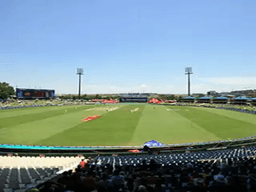
Senwes Park, Potchefstroom
AustraliaMatch analysis
Select a section to explore the available match analysis.











| SA | AUS | Winner | Series | Match | Date | Ground | MOTM |
|---|---|---|---|---|---|---|---|
| 365/9 (Balls 300) | 333/10 (Balls 299) | SA | Australia tour of South Africa ODI Series, 2026 | Match 2, ODI | 27-09-2026 | The Wanderers Stadium, Johannesburg | David Miller |
| 297/8 (Balls 300) | 230/10 (Balls 248) | SA | Australia tour of South Africa ODI Series, 2026 | Match 1, ODI | 24-09-2026 | Kingsmead Stadium, Durban | Matthew Breetzke |
| 155/10 (Balls 149) | 431/2 (Balls 300) | AUS | South Africa tour of Australia ODI Series, 2025 | Match 3, ODI | 24-08-2025 | Great Barrier Reef Arena, Mackay | Travis Head |
| 277/10 (Balls 295) | 193/10 (Balls 226) | SA | South Africa tour of Australia ODI Series, 2025 | Match 2, ODI | 22-08-2025 | Great Barrier Reef Arena, Mackay | Lungi Ngidi |
| 296/8 (Balls 300) | 198/10 (Balls 245) | SA | South Africa tour of Australia ODI Series, 2025 | Match 1, ODI | 19-08-2025 | Cazaly's Stadium, Cairns | Keshav Maharaj |
Player statistics
Statistics based on the teams’ last five ODIs since 2020
Average Scores
Wickets
Winning Percentage
Venue records
Recent Performances
Top Performers
In teams’ last five ODIs








South Africa vs Australia Match Preview
Pre-match context and key talking points.
South Africa and Australia head to Potchefstroom for the third ODI of the 2026 Australia tour of South Africa on 30 September, with Senwes Park staging a meeting between a home side carrying momentum and an Australian side searching for a response. The first two games have already underlined how fine the margins can be between these teams, but they have also shown South Africa’s ability to put Australia under sustained pressure with both bat and ball.
South Africa arrive at this fixture on the back of successive wins in Durban on 24 September 2026 and Johannesburg on 27 September 2026. Australia, by contrast, had entered the series with three straight ODI wins over Zimbabwe in Harare earlier in September 2026, only to find South Africa’s attack and batting depth asking different questions altogether. That shift in conditions and opposition quality gives the Potchefstroom contest added interest, especially with both teams featuring several players who have already left a strong imprint on this rivalry.
Conditions & Venue
Senwes Park has long been regarded as a venue that offers a fair contest. The surface is known to provide pace and movement for seamers, particularly with the new ball, while a quick outfield ensures batters are rewarded once they settle. That blend can make the first phase of the innings especially significant: sides that survive the early examination often have the platform to score freely later on.
The broader character of the ground suggests neither discipline can afford a lapse. Fast bowlers should feel they can influence the game early, especially if they hit the right lengths, but this is not a venue where batters are expected to remain quiet for long. Senwes Park has also seen substantial ODI scoring in the past, including South Africa’s 418 for 5 against Zimbabwe, which reflects the scoring potential available once partnerships are established.
There are no recent ODI venue numbers here to build a trend line around batting first, chasing, or the pace-spin split since 2020, so the clearest guide remains the ground’s general cricketing identity: early help for seam, followed by conditions that can become increasingly attractive for strokeplay. For both teams, that puts an immediate premium on the new-ball exchanges and the ability to manage the transition into the middle overs.
Team Form & Head-to-Head
South Africa’s recent ODI run has had a clear attacking edge. Across their last five matches, they have won three and posted substantial totals in several of them. In this series alone, they made 297 for 8 in Durban and then climbed to 365 for 9 in Johannesburg. Even in defeat against India in Ranchi on 30 November 2025 and Visakhapatnam on 6 December 2025, they still crossed 270 and 330 respectively in high-scoring games, while their chase of 362 for 6 against India in Raipur on 3 December 2025 remains one of the strongest indicators of their batting ceiling.
Australia’s form line is more mixed in shape, though not short on batting output. Before this tour moved to South Africa, they defeated Zimbabwe in all three ODIs in Harare in September 2026, scoring 294, 356 and then chasing 272. That sequence pointed to confidence and flexibility, but the first two matches of this series exposed some vulnerability. In Durban, they were dismissed for 230 in pursuit of 298. In Johannesburg, they competed much better with 333 in reply to 365, yet still fell short after being asked to chase a big target.
The head-to-head record across the last five ODIs between these sides since 2020 tilts South Africa’s way. They have won four of those five meetings, including both matches in this series and two of the three played in Australia in August 2025. Australia’s lone win in that span was emphatic, with 431 for 2 in Mackay on 24 August 2025, but the larger pattern shows South Africa finding more consistent answers in this matchup.
It is also notable that the contests have taken different shapes. South Africa have won by defending 297 and 365 in the current series, and they also defended 296 and 277 in Australia in 2025. Australia’s standout success came through sheer batting dominance. That contrast hints at one of the major themes entering Potchefstroom: South Africa have repeatedly shown they can control games across phases, while Australia may need a more complete performance rather than one exceptional passage.
Players to Watch
Temba Bavuma has provided South Africa with authority at the top and calm leadership through the opening two matches. His 103 from 116 balls in Johannesburg on 27 September 2026 was a captain’s innings in both substance and tempo, and it reinforced his value as the player who can absorb pressure up front before setting the platform for South Africa’s stroke-makers.
Matthew Breetzke has also been central to South Africa’s strong start. His 112 against Australia in Durban on 24 September 2026 gave the innings shape, and his broader ODI returns underline how quickly he has become a reliable top-order presence. Against this Australian attack, he has already shown he can do more than just get starts; he can build match-defining innings.
With the ball, Keshav Maharaj remains a key figure in the middle overs. His 4 for 20 in Durban was one of the decisive spells of the series, and his broader record against Australia is compelling. He claimed 5 for 33 in Cairns in August 2025 and has consistently found ways to break partnerships in this contest. His duel with Australia’s left-handers, particularly Travis Head, could be significant.
Marco Jansen gives South Africa another route into the game because of his all-round impact. His 75 from 59 balls in Durban showed the batting depth he offers, while his left-arm pace has already produced wickets in this series. At a venue where seamers can expect some early encouragement, his role could become even more influential.
For Australia, Travis Head remains one of the most dangerous players in the match despite the team’s defeats. He made 84 off 76 balls in Johannesburg and has a major score against South Africa in this rivalry, the 142 at Mackay in August 2025. He is the kind of batter who can alter a chase or set-up in a short burst, but South Africa’s bowlers have also shown they can ask him questions.
Mitchell Marsh, Australia’s captain, has looked in good touch. His scores of 60 off 36 and 84 off 53 in the first two matches have given Australia momentum, but those contributions have not yet translated into victories. That may make his role even more important at Potchefstroom, where Australia need both his aggression and his game management.
Among Australia’s bowlers, Nathan Ellis and Jack Edwards stand out for different reasons. Ellis took 3 for 57 in Durban and has carried wicket-taking form from the Zimbabwe series, where he claimed 5 for 31 and 3 for 50 in September 2026. Edwards, meanwhile, produced 5 for 67 in Johannesburg, a return that showed Australia can still create damage even when South Africa’s top order gets moving. If either can strike early at Senwes Park, Australia’s shape in the match changes quickly.
Final Word
The third ODI looks likely to be shaped by the same themes that have run through the series so far: South Africa’s ability to build substantial totals, Australia’s counterpunching power, and the contest between South Africa’s control in the middle overs and Australia’s attacking top order. At Senwes Park, the new ball could carry extra importance given the venue’s tendency to offer pace and movement early before easing for batters.
For South Africa, a strong start from Bavuma and Breetzke followed by middle-overs control from Maharaj would reinforce a pattern that has already brought two wins. For Australia, the challenge is to turn individual contributions from players such as Head, Marsh, Ellis and Edwards into a more rounded team display. With both sides carrying clear strengths into a venue that rewards quality in all phases, Potchefstroom is well placed to deliver a sharply contested finish to the series.
Match News
Recent news and updates related to this match.