 West Indies
 New ZealandWest Indies
New Zealand tour of West Indies ODI Series, 2026
WIvsNZ
ODI · Match 1
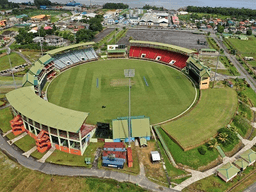
Providence Stadium, Guyana
New ZealandMatch analysis
Select a section to explore the available match analysis.











| WI | NZ | Winner | Series | Match | Date | Ground | MOTM |
|---|---|---|---|---|---|---|---|
| 161/10 (Balls 218) | 162/6 (Balls 183) | NZ | West Indies tour of New Zealand ODI Series, 2025 | Match 3, ODI | 22-11-2025 | Seddon Park, Hamilton | Matt Henry |
| 247/9 (Balls 204) | 248/5 (Balls 201) | NZ | West Indies tour of New Zealand ODI Series, 2025 | Match 2, ODI | 19-11-2025 | McLean Park, Napier | Shai Hope |
| 262/6 (Balls 300) | 269/7 (Balls 300) | NZ | West Indies tour of New Zealand ODI Series, 2025 | Match 1, ODI | 16-11-2025 | Hagley Oval, Christchurch | Daryl Mitchell |
| 301/8 (Balls 300) | 307/5 (Balls 283) | NZ | New Zealand tour of West Indies ODI Series, 2022 | Match 3, ODI | 21-08-2022 | Kensington Oval, Bridgetown | Tom Latham |
| 161/10 (Balls 213) | 212/10 (Balls 290) | NZ | New Zealand tour of West Indies ODI Series, 2022 | Match 2, ODI | 19-08-2022 | Kensington Oval, Bridgetown | Finn Allen |
Player statistics
Statistics based on the teams’ last five ODIs since 2020
Average Scores
Wickets
Winning Percentage
Venue records
| First-Inning | Second-Inning | Winner | Series | Match | Date | MOTM |
|---|---|---|---|---|---|---|
| WI: 178/10 (Balls 292) | BAN: 179/6 (Balls 291) | BAN | Bangladesh tour of West Indies ODI Series, 2022 | Match 3, ODI | 16-07-2022 | Taijul Islam |
| WI: 108/10 (Balls 210) | BAN: 112/1 (Balls 124) | BAN | Bangladesh tour of West Indies ODI Series, 2022 | Match 2, ODI | 13-07-2022 | Nasum Ahmed |
| WI: 149/9 (Balls 246) | BAN: 151/4 (Balls 191) | BAN | Bangladesh tour of West Indies ODI Series, 2022 | Match 1, ODI | 10-07-2022 | Mehidy Hasan Miraz |
Recent Performances
Top Performers
In teams’ last five ODIs





West Indies vs New Zealand Match Preview
Pre-match context and key talking points.
West Indies and New Zealand begin the ODI leg of the New Zealand tour of West Indies with the first match at Providence Stadium in Guyana on 12 July 2026. For both sides, it is a useful early marker in a fresh series: West Indies will be looking to settle after a difficult run of ODI results, while New Zealand arrive with the stronger recent body of work despite mixed returns in Bangladesh in April 2026.
Providence brings its own demands. The venue numbers point to a low-scoring surface in the ODI matches played here since 2020, and that could shape the tone of the contest straight away. With both teams carrying players who can influence the middle overs, the balance between accumulation and wicket preservation may be just as important as boundary-hitting.
Conditions & Venue
The recent ODI record at Providence Stadium suggests totals have been modest. The average first-innings score stands at 145, with the average second-innings score marginally higher at 147. Just as notable is the chasing trend: all three ODIs in the sample were won by the side batting second, giving chasing a 100 percent success rate in that period.
The three matches here in July 2022 between West Indies and Bangladesh followed a clear pattern. West Indies were bowled out for 149 in the first ODI before Bangladesh chased it down with six wickets in hand. In the second match, West Indies slipped to 108 all out, and Bangladesh reached the target with ease. Even the highest first-innings score in that sequence, 178, was chased down. That does not automatically make this a one-dimensional venue, but it does underline how difficult it can be to build a truly commanding total here.
The split in wicket-taking also stands out. Slow bowlers have claimed 28 wickets compared to 9 for fast bowlers in the available sample, a strong indication that spin and change of pace have had far greater influence than outright pace. On a ground where innings have not tended to run away, control through the middle overs could become central. Batters who are comfortable rotating strike and resisting scoreboard pressure may be especially valuable.
Team Form & Head-to-Head
West Indies come into the series looking for a reset. Their last completed ODI, against Sri Lanka at Sabina Park on 3 June 2026, ended in a 41-run defeat after conceding 303 and being bowled out for 262. Two subsequent matches in that series did not produce a result. Before that, they were beaten 3-0 in New Zealand in November 2025, including chases of 247 and 161 that New Zealand completed comfortably enough. The broader pattern across their recent completed games is clear: West Indies have had difficulty stringing together full 50-over performances with either bat or ball.
New Zealand’s recent sequence is stronger, though not without a check. They won three of their last five ODIs, including back-to-back victories in India in January 2026. Those wins were significant for the manner of them as much as the results: they chased 284 in Rajkot with authority and then posted 337 in Indore before defending it against India. Their April 2026 tour of Bangladesh was more uneven, however. After winning the opening ODI, New Zealand lost the next two, and in both defeats their batting was kept below 211. That contrast suggests a side capable of adapting to high-scoring conditions, but also one that can be tested when surfaces slow down and strokeplay becomes harder.
The recent head-to-head record strongly favours New Zealand. They have won each of the last five ODIs between the teams since 2020, including a 3-0 result at home in November 2025 and a 3-0 sweep in the Caribbean in August 2022 across the matches listed here. Importantly, those wins have come in different ways: New Zealand defended 269 in Christchurch in 2025, chased 247 in Napier, and also overhauled 301 in Bridgetown in 2022. That range speaks to a side that has repeatedly found answers against this opposition.
Players to Watch
For West Indies, Shai Hope remains the obvious batting reference point. The ODI captain scored 109 off 69 balls against New Zealand in Napier on 19 November 2025, and he followed that with 56 against Sri Lanka in June 2026. In a venue where totals have been hard-earned, Hope’s ability to build an innings without losing tempo could be central. His matchup numbers against New Zealand’s attack are also encouraging: he has handled Mitchell Santner, Michael Bracewell and Nathan Smith without being dismissed in the available head-to-head sample.
Roston Chase could have an important all-round role on this surface. He made 38 against New Zealand at Seddon Park in November 2025 and took two wickets against Sri Lanka in June 2026. More relevant at Providence may be his offspin. With slow bowlers having enjoyed far more success than quicks at this venue, Chase’s ability to slow the game down and break partnerships could become a major factor. He has also dismissed Tom Latham and Will Young in previous meetings.
Among the West Indies quicks, Jayden Seales looks significant even at a venue that has leaned toward spin. He took three wickets against New Zealand in Christchurch in November 2025 and followed with two more in Hamilton. His matchup record includes dismissals of Daryl Mitchell, Mark Chapman, Mitchell Santner and Tom Latham, which gives West Indies a bowler who has already shown he can trouble New Zealand’s middle order.
Matthew Forde offers another useful dimension. He picked up two wickets against Sri Lanka in June 2026 and also struck twice against New Zealand in Hamilton in November 2025. His lower-order hitting, including a brisk 21 off 11 against New Zealand in Napier, could matter if this becomes the sort of game where an extra 20 or 30 runs changes the balance.
For New Zealand, Daryl Mitchell arrives as the standout recent ODI batter. He made 131 in Rajkot and 137 in Indore in January 2026, and he also scored 119 against West Indies in Christchurch in November 2025. He has shown he can anchor and accelerate, and that adaptability will be valuable if Providence again produces a surface where timing the innings is more important than brute force.
Mitchell Santner, New Zealand’s ODI captain, could be especially influential in Guyana. His left-arm spin aligns neatly with the venue trend, and he has previous returns against West Indies that include a two-wicket spell in Hamilton in November 2025. Santner has also chipped in with handy runs in this matchup, including a 34 from 15 in Napier. On a ground where spin has dominated, his control and game management may be pivotal.
Nathan Smith is another player worth watching after making a direct impact in this fixture in 2025. He claimed 4 for 42 against West Indies in Napier and also took three wickets against Bangladesh in Mirpur in April 2026. If New Zealand need breakthroughs against West Indies’ middle order, he has already shown he can provide them.
Michael Bracewell adds further depth to New Zealand’s middle overs. He made 40 against West Indies in Hamilton in November 2025 and contributed with the ball in India in January 2026. His offspin could be useful on a surface where slower bowlers have been the main wicket-taking force.
Final Word
This opening ODI may come down less to headline strokeplay and more to who reads Providence better. The venue record points to a match in which spin has a major say, chasing has held a clear edge, and even moderate totals can become competitive if wickets fall in clusters. For West Indies, Hope’s stability and support from their all-rounders and seamers will be crucial. For New Zealand, the recent reliability of Mitchell and the control offered by Santner and Smith give them a strong platform.
If the surface follows the pattern of the last ODIs played here, middle-overs control and the ability to judge a chase calmly should decide the first step of the series.
Playing XI
Confirmed players selected for this match.


Match News
Recent news and updates related to this match.