 West Indies
 New ZealandWest Indies
New Zealand tour of West Indies ODI Series, 2026
WIvsNZ
ODI · Match 2
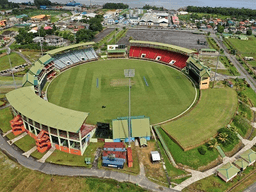
Providence Stadium, Guyana
New ZealandMatch analysis
Select a section to explore the available match analysis.











| NZ | WI | Winner | Series | Match | Date | Ground | MOTM |
|---|---|---|---|---|---|---|---|
| 267/10 (Balls 299) | 268/3 (Balls 293) | WI | New Zealand tour of West Indies ODI Series, 2026 | Match 1, ODI | 12-07-2026 | Providence Stadium, Guyana | Keacy Carty |
| 162/6 (Balls 183) | 161/10 (Balls 218) | NZ | West Indies tour of New Zealand ODI Series, 2025 | Match 3, ODI | 22-11-2025 | Seddon Park, Hamilton | Matt Henry |
| 248/5 (Balls 201) | 247/9 (Balls 204) | NZ | West Indies tour of New Zealand ODI Series, 2025 | Match 2, ODI | 19-11-2025 | McLean Park, Napier | Shai Hope |
| 269/7 (Balls 300) | 262/6 (Balls 300) | NZ | West Indies tour of New Zealand ODI Series, 2025 | Match 1, ODI | 16-11-2025 | Hagley Oval, Christchurch | Daryl Mitchell |
| 307/5 (Balls 283) | 301/8 (Balls 300) | NZ | New Zealand tour of West Indies ODI Series, 2022 | Match 3, ODI | 21-08-2022 | Kensington Oval, Bridgetown | Tom Latham |
Player statistics
Statistics based on the teams’ last five ODIs since 2020
Average Scores
Wickets
Winning Percentage
Venue records
| First-Inning | Second-Inning | Winner | Series | Match | Date | MOTM |
|---|---|---|---|---|---|---|
| NZ: 267/10 (Balls 299) | WI: 268/3 (Balls 293) | WI | New Zealand tour of West Indies ODI Series, 2026 | Match 1, ODI | 12-07-2026 | Keacy Carty |
| WI: 178/10 (Balls 292) | BAN: 179/6 (Balls 291) | BAN | Bangladesh tour of West Indies ODI Series, 2022 | Match 3, ODI | 16-07-2022 | Taijul Islam |
| WI: 108/10 (Balls 210) | BAN: 112/1 (Balls 124) | BAN | Bangladesh tour of West Indies ODI Series, 2022 | Match 2, ODI | 13-07-2022 | Nasum Ahmed |
| WI: 149/9 (Balls 246) | BAN: 151/4 (Balls 191) | BAN | Bangladesh tour of West Indies ODI Series, 2022 | Match 1, ODI | 10-07-2022 | Mehidy Hasan Miraz |
Recent Performances
Top Performers
In teams’ last five ODIs





West Indies vs New Zealand Match Preview
Pre-match context and key talking points.
West Indies and New Zealand return to Providence Stadium in Guyana for the second ODI of the 2026 series on 14 July, with the hosts carrying momentum after a polished chase in the opener at the same venue. In a contest that already offered a clear snapshot of the conditions, West Indies tracked down 267 with authority, finishing on 268 for 3, and that result has added shape to what promises to be another important game in the New Zealand tour of West Indies ODI Series, 2026.
For West Indies, the opening win was a timely lift after a run of mixed outcomes in 2025 and 2026. For New Zealand, it was a reminder that a competitive first-innings total at Providence does not automatically translate into control. With both sides now working from evidence gathered only two days earlier, the second match should be defined by how well they adapt to the surface, particularly through the middle overs.
Conditions & Venue
Providence Stadium’s recent ODI numbers point strongly in one direction: chasing has been the dominant trend. In the last four ODIs at the ground since 2022, the side batting second has won every time. The venue averages reinforce that pattern too, with the average first-innings score at 176 and the average second-innings score at 178, suggesting that targets have generally remained manageable rather than imposing.
That broad trend coexists with an interesting contrast in individual matches. On 12 July 2026, New Zealand posted 267, yet West Indies chased it with room to spare, losing only three wickets. Back in July 2022, Bangladesh also completed three successful chases at the venue, overhauling 149, 108 and 178. Those results do not suggest a one-dimensional batting paradise, but they do show that sides have found it easier to pace a chase here than to put a game beyond reach batting first.
The bowling split is just as revealing. Of the 50 wickets to fall across those four ODIs, 36 have gone to slow bowlers and only 14 to the quicks. That points to spin or slower-paced bowling having a major say at Providence. It does not mean pace is irrelevant — Alzarri Joseph’s 4 for 41 in the series opener showed fast bowlers can still be decisive — but the venue’s wider pattern suggests control through spin remains a significant theme.
With chasing teams enjoying a 100 percent success rate in this sample, and slow bowlers taking the majority of wickets, the balance between setting a score and managing the middle overs could again be central. A total in the mid-200s can still be competitive, but only if backed by sustained control with the ball.
Team Form & Head-to-Head
West Indies come into this game with one win in their last five ODIs, though that raw sequence needs context. Two of those matches against Sri Lanka at Sabina Park in June 2026 were recorded as no results, while the other completed match in that series ended in defeat after West Indies were bowled out for 262 chasing 304. Before this current series, they also lost the third ODI in Hamilton in November 2025, where New Zealand chased 162 comfortably. Against that backdrop, the opening victory in Guyana was one of their more complete ODI displays in this stretch.
New Zealand’s recent form is also mixed. They have won two of their last five ODIs, including a strong 337 for 8 against India in Indore in January 2026 and a win in Mirpur in April 2026, but they also lost two matches in Bangladesh later that month before slipping in the first ODI of this series. Their recent batting returns show they are capable of posting solid totals, but their last three defeats have all come with the opposition completing the chase.
The head-to-head record across the last five ODIs between these sides still tilts clearly towards New Zealand. They won four in a row before West Indies broke that run on 12 July 2026. Three of those New Zealand wins came in the November 2025 series at home, and the other came in Bridgetown in August 2022 when they chased 302. So while West Indies have the immediate advantage of the latest result, New Zealand’s recent overall record in this matchup remains substantial.
There is also a noticeable pattern in those meetings: several games have been shaped by controlled chasing. New Zealand chased 248 in Napier in November 2025, 162 in Hamilton later that month, and 307 in Bridgetown in August 2022. West Indies then responded by chasing 268 in Guyana in July 2026. That repeated ability of the chasing side to dictate terms adds another layer to the venue trend in Providence.
Players to Watch
Shai Hope remains central to West Indies’ batting and leadership. The captain made 87 from 92 balls in the first ODI at Providence and has a notable recent record against New Zealand, including 109 from 69 balls in Napier in November 2025. Just as importantly, his matchup numbers against New Zealand’s spin options stand out: he has not been dismissed by Mitchell Santner across 75 balls and has also handled Michael Bracewell effectively. On a ground where spin can heavily influence the middle overs, Hope’s ability to manage that phase could be crucial.
Keacy Carty is another major figure after his 95 from 112 balls in the opener, an innings that earned him the player-of-the-match award. It was an innings of control rather than excess, exactly the sort of contribution that can shape ODI chases at Providence. He also has previous runs against New Zealand, and his method in the first match suggested he is well attuned to the surface.
With the ball, Alzarri Joseph looms large for West Indies. His 4 for 41 in the first ODI gave the hosts a decisive edge and underlined how a strike fast bowler can still make inroads despite the venue’s spin-friendly numbers. He has also enjoyed success against this opposition before, and his duel with New Zealand’s middle order, especially Daryl Mitchell, could be one of the game’s defining contests.
Vitel Lawes is the other West Indies bowler to watch closely. The left-arm wrist-spinner claimed 3 for 54 in the opener, and that performance gains extra significance at a ground where slow bowlers have dominated the wicket count. If Providence again rewards variation and control, Lawes could have another major role in the middle overs.
For New Zealand, Daryl Mitchell remains the most compelling batting threat in this fixture. He made 65 from 73 balls in the first ODI and has a strong body of work against West Indies, including 119 from 118 balls in Christchurch in November 2025. He also struck 137 against India in January 2026, which underlines his broader ODI form. If New Zealand are to turn competitive starts into a match-winning position, Mitchell is likely to be central.
Mitchell Santner’s influence may extend beyond his own numbers from the opening game. He went wicketless in Guyana, but his overall record against West Indies includes multiple productive outings, including a two-wicket return in Hamilton in November 2025. As captain and lead spinner, he is a key figure on a ground where slow bowling has been particularly influential.
Michael Bracewell offers a similar all-round dimension. He made 29 in the first ODI and picked up a wicket, including the dismissal of Carty. Nathan Smith is another name to monitor despite a quieter start in this series; he produced 4 for 42 against West Indies in Napier in November 2025 and has shown he can provide impact with the ball even if that did not materialise in the opener.
Final Word
The first ODI and the wider Providence record both point to the same pressure points. Middle-overs control, especially through spin, looks vital. So does the ability to judge a chase calmly rather than simply forcing the pace. West Indies have the benefit of having done that expertly on 12 July 2026, while New Zealand must find a way to turn solid batting foundations into a more defensible position.
If the pitch again rewards slower bowling and measured batting, the contest could come down to which side better manages that balance between accumulation and wicket-taking pressure. With West Indies buoyed by a strong opening win and New Zealand carrying a more established recent head-to-head record, the second ODI is well set up as a revealing test of adjustment and execution.
Playing XI
Confirmed players selected for this match.


Match News
Recent news and updates related to this match.