 Zimbabwe
 AustraliaZimbabwe
Australia tour of Zimbabwe ODI Series, 2026
ZIMvsAUS
ODI · Match 2
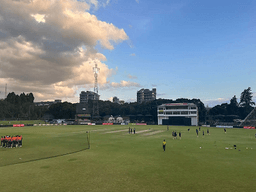
Harare Sports Club, Harare
AustraliaMatch analysis
Select a section to explore the available match analysis.











| AUS | ZIM | Winner | Series | Match | Date | Ground | MOTM |
|---|---|---|---|---|---|---|---|
| 294/8 (Balls 300) | 235/10 (Balls 271) | AUS | Australia tour of Zimbabwe ODI Series, 2026 | Match 1, ODI | 15-09-2026 | Harare Sports Club, Harare | Matt Renshaw |
| 141/10 (Balls 186) | 142/7 (Balls 234) | ZIM | Zimbabwe tour of Australia ODI Series, 2022 | Match 3, ODI | 03-09-2022 | Riverway Stadium, Townsville | Ryan Burl |
| 100/2 (Balls 88) | 96/10 (Balls 167) | AUS | Zimbabwe tour of Australia ODI Series, 2022 | Match 2, ODI | 31-08-2022 | Riverway Stadium, Townsville | Mitchell Starc |
| 201/5 (Balls 201) | 200/10 (Balls 285) | AUS | Zimbabwe tour of Australia ODI Series, 2022 | Match 1, ODI | 28-08-2022 | Riverway Stadium, Townsville | Cameron Green |
Player statistics
Statistics based on the teams’ last five ODIs since 2020
Average Scores
Wickets
Winning Percentage
Venue records
| First-Inning | Second-Inning | Winner | Series | Match | Date | MOTM |
|---|---|---|---|---|---|---|
| AUS: 294/8 (Balls 300) | ZIM: 235/10 (Balls 271) | AUS | Australia tour of Zimbabwe ODI Series, 2026 | Match 1, ODI | 15-09-2026 | Matt Renshaw |
| ZIM: 199/10 (Balls 289) | BAN: 200/3 (Balls 216) | BAN | Bangladesh tour of Zimbabwe ODI Series, 2026 | Match 3, ODI | 11-07-2026 | Tanzid Hasan |
| ZIM: 247/6 (Balls 300) | BAN: 234/10 (Balls 289) | ZIM | Bangladesh tour of Zimbabwe ODI Series, 2026 | Match 2, ODI | 09-07-2026 | Ben Curran |
| ZIM: 141/10 (Balls 220) | BAN: 116/10 (Balls 199) | ZIM | Bangladesh tour of Zimbabwe ODI Series, 2026 | Match 1, ODI | 06-07-2026 | Newman Nyamhuri |
| ZIM: 277/7 (Balls 300) | SL: 278/5 (Balls 297) | SL | Sri Lanka tour of Zimbabwe ODI Series, 2025 | Match 2, ODI | 31-08-2025 | Pathum Nissanka |
Recent Performances
Top Performers
In teams’ last five ODIs




Zimbabwe vs Australia Match Preview
Pre-match context and key talking points.
Australia and Zimbabwe return to Harare Sports Club for the second ODI of the Australia tour of Zimbabwe ODI Series, 2026, on 18 September 2026. After Australia took the opening game at the same venue, the second match carries obvious weight in shaping the rest of the short series. For Zimbabwe, it is a chance to respond on home soil and turn encouraging individual performances into a fuller team display. For Australia, it is an opportunity to build on a strong start and reinforce the methods that worked so well in the first fixture.
Harare remains central to that contest. The venue has produced a range of scores in ODIs since 2025, but the broad pattern suggests that teams able to put together a substantial first innings still hold a meaningful edge. Australia showed that in the series opener, posting 294 before bowling Zimbabwe out for 235, and that result now becomes the freshest point of reference heading into Friday’s game.
Conditions & Venue
The numbers at Harare Sports Club point to generally competitive rather than extreme scoring conditions. Across the last five ODIs at the ground since 2025, the average first-innings score stands at 232, with the average second innings at 213. Teams batting first have won three of those five matches, a 60 percent return, while chasing sides have won twice.
That split suggests no overwhelming toss bias, but it does underline the value of scoreboard pressure. The most recent ODI here, on 15 September 2026, followed that pattern closely as Australia’s 294 proved well beyond Zimbabwe despite half-centuries from the home side’s senior batters. Equally, Harare has also shown that lower scores can still be defended if bowlers exploit the surface well enough: Zimbabwe’s 141 against Bangladesh on 6 July 2026 was enough for victory in a match dominated by the bowlers.
The bowling breakdown is perhaps the most revealing indicator. Fast bowlers have claimed 64 wickets in those five ODIs, compared to 13 for slow bowlers. That is a significant tilt towards seam, and it aligns with the ground’s reputation for offering something to pace bowlers, even if batting can be fluent early on. The pitch can still slow as an innings progresses, but the recent figures suggest seamers have had the greater influence on outcomes.
That balance should shape the contest again. Batters who make the most of the truer early phase can set the game up, but the seam attacks have had enough assistance here to keep sides honest throughout the 50 overs. A first-innings total in the range of the venue average may not always feel secure; a score closer to what Australia managed in the opener places far greater pressure on the chase.
Team Form & Head-to-Head
Zimbabwe’s last five ODIs have produced two wins and three defeats. Both victories came against Bangladesh in Harare in July 2026, including a low-scoring success by 25 runs and a more rounded performance built around 247/6. Those results showed they can compete effectively at home when they control key phases with the ball and receive meaningful contributions from the middle order. The defeats, though, show the challenge of sustaining that level. They were bowled out in losses to Bangladesh on 11 July 2026 and to Australia on 15 September 2026, and they also fell short after posting 277/7 against Sri Lanka on 31 August 2025.
Australia’s recent ODI form is more mixed across the last five matches, with two wins and three losses, but the direction of travel improved in the lead-in to this game. They lost a series in Bangladesh in June 2026 and were also beaten by Pakistan in Lahore earlier that month, yet they did finish that Bangladesh tour with a successful chase of 277 on 14 June 2026. That was followed by a commanding all-round display against Zimbabwe in the first ODI in Harare. In that sense, Australia arrive with some momentum even if their broader five-match sequence has contained uneven patches.
The recent head-to-head record also offers Zimbabwe one reminder that Australia can be challenged. In the last four ODIs between the sides since 2022, Australia have won three and Zimbabwe one. Zimbabwe’s standout result remains the victory in Townsville on 3 September 2022, when they chased 142 after bowling Australia out for 141. But the latest meeting swung firmly Australia’s way, with a 59-run win in Harare on 15 September 2026 built on a dominant batting platform and followed by a decisive bowling effort.
That mix makes the second ODI interesting. Australia hold the fresher advantage and the better recent head-to-head line, but Zimbabwe have already shown in this rivalry and at this venue that disciplined bowling can narrow the gap quickly.
Players to Watch
For Zimbabwe, Sikandar Raza remains the central figure. The captain made 57 from 76 balls in the first ODI against Australia, the top score of Zimbabwe’s chase, and he also has a 59 at Harare against Sri Lanka in 2025. Those innings underline his value as the batter most capable of giving Zimbabwe structure in the middle overs. With the ball, his off-spin offers control, even if the venue’s recent seam-heavy trends suggest Zimbabwe may rely more on their quicks for breakthroughs.
Newman Nyamhuri is impossible to overlook after the opening game. His 5 for 62 against Australia on 15 September 2026 was not only Zimbabwe’s standout bowling performance in the match, it also fits the wider story of pace bowlers having a major say at Harare. The left-arm angle gives Zimbabwe variation, and his ability to dismiss a spread of Australia’s batters in the first ODI showed he can remain a threat even when the opposition gets ahead.
Brad Evans adds another important dimension for the home side. He has contributed with both bat and ball in Harare, including scores of 58 and 50 against Bangladesh in July 2026, while also taking wickets in each of his top bowling returns listed here. His 2 for 51 against Australia in the opener was another reminder that Zimbabwe’s seamers can create opportunities if they hold their lengths consistently.
Ben Curran is also worth attention despite a quiet first ODI against Australia. His 111 against Bangladesh at Harare on 9 July 2026 and 79 against Sri Lanka at the same ground in 2025 show clear comfort at the venue. Zimbabwe would benefit greatly if one of their top-order batters can turn that home familiarity into a long innings here.
For Australia, Matt Renshaw is the obvious starting point after his 109 from 94 balls in the series opener. It was the innings that gave Australia command of the game, and it came in conditions that have not always yielded very big first-innings totals. He also handled Zimbabwe’s varied attack well, even if Nyamhuri eventually removed him.
Nathan Ellis was just as decisive in the first ODI, returning 5 for 31. At a venue where fast bowlers have dominated the wicket-taking numbers, that spell could be especially significant as a pointer for the second match. He has also taken three wickets against Bangladesh in June 2026, so he arrives with form beyond a single performance.
Cooper Connolly offers Australia flexibility that could matter on a surface with changing tempos. He followed a prolific series in Bangladesh, highlighted by 149 on 14 June 2026, with a brisk 51 from 46 balls against Zimbabwe in the opener. He also chipped in with a wicket in that match, reinforcing his all-round value.
Cameron Green has a quieter recent batting record than some of Australia’s other names in this fixture, but his past ODI returns against Zimbabwe are notable with the ball. He took 5 for 33 in Townsville on 28 August 2022 and has repeatedly found a way into Zimbabwe’s middle order in this matchup.
Final Word
The clearest themes heading into the second ODI are straightforward: how well Zimbabwe can withstand Australia’s pace bowling, and whether the home side’s seamers can again make enough inroads to prevent another substantial first innings. Harare’s recent ODI record suggests fast bowlers should remain heavily involved, while the first match of the series showed the value of converting a solid start into a total that applies scoreboard pressure.
Zimbabwe have enough evidence from Harare in 2026 to believe they can compete if they stitch together their batting more effectively around Raza and support their seamers with sharper fielding and longer partnerships. Australia, meanwhile, will look to replicate the balance they found in the opener through a major top-order contribution and incisive fast bowling. With the surface offering something to both disciplined batting and seam, the second ODI is well placed to be shaped by execution rather than reputation.
Match News
Recent news and updates related to this match.