 Zimbabwe
 IndiaZimbabwe
India tour of Zimbabwe T20I Series, 2026
ZIMvsIND
T20I · Match 2
Harare Sports Club, Harare
IndiaMatch analysis
Select a section to explore the available match analysis.










| ZIM | IND | Winner | Series | Match | Date | Ground | MOTM |
|---|---|---|---|---|---|---|---|
| 125/7 (Balls 120) | 126/3 (Balls 80) | IND | India tour of Zimbabwe T20I Series, 2026 | Match 1, T20I | 24-07-2026 | Harare Sports Club, Harare | Mayank Yadav |
| 184/6 (Balls 120) | 256/4 (Balls 120) | IND | ICC Men's T20I World Cup, 2026 | Match 48, SuperEightGroup1 | 26-02-2026 | M. A. Chidambaram Stadium, Chennai | Hardik Pandya |
| 125/10 (Balls 111) | 167/6 (Balls 120) | IND | India tour of Zimbabwe | Match 5, T20I | 14-07-2024 | Harare Sports Club, Harare | Shivam Dube |
| 152/7 (Balls 120) | 156/0 (Balls 92) | IND | India tour of Zimbabwe | Match 4, T20I | 13-07-2024 | Harare Sports Club, Harare | Yashasvi Jaiswal |
| 159/6 (Balls 120) | 182/4 (Balls 120) | IND | India tour of Zimbabwe | Match 3, T20I | 10-07-2024 | Harare Sports Club, Harare | Washington Sundar |
Player statistics
Statistics based on the teams’ last five T20Is since 2020
Average Scores
Wickets
Winning Percentage
Venue records
| First-Inning | Second-Inning | Winner | Series | Match | Date | MOTM |
|---|---|---|---|---|---|---|
| ZIM: 125/7 (Balls 120) | IND: 126/3 (Balls 80) | IND | India tour of Zimbabwe T20I Series, 2026 | Match 1, T20I | 24-07-2026 | Mayank Yadav |
| AFG: 210/3 (Balls 120) | ZIM: 201/10 (Balls 120) | AFG | Afghanistan tour of Zimbabwe, 2025 | Match 3, T20I | 02-11-2025 | Rahmanullah Gurbaz |
| ZIM: 125/10 (Balls 117) | AFG: 129/3 (Balls 108) | AFG | Afghanistan tour of Zimbabwe, 2025 | Match 2, T20I | 31-10-2025 | Rashid Khan |
| AFG: 180/6 (Balls 120) | ZIM: 127/10 (Balls 97) | AFG | Afghanistan tour of Zimbabwe, 2025 | Match 1, T20I | 29-10-2025 | Azmatullah Omarzai |
| NAM: 167/6 (Balls 120) | ZIM: 171/3 (Balls 116) | ZIM | ICC Men's T20 World Cup Africa Region Final, 2025 | Match Final, T20I | 04-10-2025 | Tadiwanashe Marumani |
Recent Performances
Top Performers
In teams’ last five T20Is








Zimbabwe vs India Match Preview
Pre-match context and key talking points.
India and Zimbabwe return to Harare Sports Club for the second T20I of the India tour of Zimbabwe T20I Series, 2026 on 25 July 2026, with the visitors carrying the early advantage after a commanding result in the opener. India’s chase of 126 in just 80 balls on 24 July 2026 set the tone for the contest, while Zimbabwe now have the immediate task of finding a stronger batting return at the same venue and against a bowling attack that settled quickly into the conditions.
For India, the first game offered a timely lift after a difficult run in England earlier in July 2026. For Zimbabwe, the challenge is twofold: arrest a broader sequence of defeats and also reverse a head-to-head trend that has tilted heavily India’s way across the last few meetings. With the surface and conditions fresh in both sides’ minds, the second match should offer a clearer examination of how quickly Zimbabwe can adapt and whether India can reproduce the sharpness they showed in all three phases of the opening fixture.
Conditions & Venue
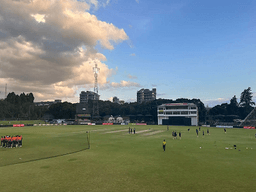
Harare Sports Club’s recent T20I numbers suggest a venue that sits in a competitive middle ground rather than a batting free-for-all. Across the last five T20Is here, the average first-innings score is 161 and the average second-innings score is 151. Teams chasing have won three of those five matches, compared to two wins for sides batting first, which points to a modest edge for the team setting out after knowing the target.
The most immediate reference point is the first match of this series on 24 July 2026, when Zimbabwe were held to 125 for 7 and India chased it down with seven overs to spare. That game showed that anything below par can disappear quickly here if a side allows the chase to start cleanly. At the same time, Harare has also produced much higher-scoring cricket, as seen on 2 November 2025 when Afghanistan made 210 for 3 and Zimbabwe replied with 201. The venue, then, is capable of supporting aggressive batting, but totals still need substance.
The broader bowling split is also instructive. Fast bowlers have taken 36 wickets in the last five T20Is at the ground, compared to 21 for slow bowlers. That does not rule spin out of the game, especially on a surface that can slow as an innings develops, but it does underline how important seamers can be in setting the tone, particularly with the newer ball and through hard lengths. Given what unfolded in the series opener, pace once again looks likely to have a central say.
Team Form & Head-to-Head
Zimbabwe’s last five T20Is have brought four defeats and one win. The victory came against Bangladesh in Bulawayo on 15 July 2026, when they defended 170 and bowled Bangladesh out for 138, a result that highlighted what they can do when their bowling attack gets ahead of the game. But the pattern around that has been less encouraging. In losses to Bangladesh on 17 and 19 July 2026, and then to India on 24 July 2026, Zimbabwe’s batting struggled either to post enough or to keep pace with the chase. Even their World Cup defeat to South Africa on 1 March 2026 followed a similar line, with 153 proving insufficient.
India’s recent form looks split across two very different phases. They arrive in this game having won the first T20I in Harare convincingly, but that success followed four straight defeats in England earlier in July 2026. Those losses came in very different circumstances: India were outgunned in a high-scoring match at Southampton on 11 July 2026, fell short after posting 190 in Manchester on 4 July 2026, and also suffered heavy setbacks at Nottingham and Bristol. The opening win in Harare therefore mattered not only for the series but also as evidence that this group could reset quickly in a new environment.
The recent head-to-head record strongly favours India. They have won each of the last five T20Is between the sides listed here, including the World Cup meeting in Chennai on 26 February 2026 and the opening match of this series. The Harare meetings in July 2024 also followed a familiar pattern, with India repeatedly either posting enough or chasing with authority. Zimbabwe have had individual performances of note in those contests, but the larger trend has been India controlling games more consistently.
Players to Watch
Zimbabwe’s hopes naturally rest heavily on Sikandar Raza, their captain and leading all-round figure. His value lies not just in volume of contribution but in flexibility. He struck 73 from 43 balls against South Africa on 1 March 2026 and also took 3 for 29 in the same match, a reminder of how much influence he can exert across disciplines. Against India, he has previous evidence too: 46 from 28 balls in Harare on 13 July 2024 and a two-wicket spell at the venue on 10 July 2024. Zimbabwe need more from him than the 4 he made in the first T20I of this series.
Blessing Muzarabani remains Zimbabwe’s clearest pace threat on a ground where seamers have enjoyed more success than spinners in recent T20Is. He took 2 for 26 in the first game of the series and has repeatedly produced useful returns against India, including two-wicket efforts in Harare in July 2024 as well. His 4 for 17 against Bangladesh on 15 July 2026 was Zimbabwe’s standout bowling performance in their last five T20Is and showed how damaging he can be when he gets movement and bounce.
Dion Myers offers another important route for Zimbabwe’s recovery. His 73 off 53 balls against Bangladesh on 19 July 2026 was one of the side’s best innings in this period, and he also has a substantial record against India, including 65 from 49 balls in Harare on 10 July 2024. Zimbabwe need someone to stitch the innings together if the early wickets fall, and Myers has shown he can do that role.
For India, the pace story from the opener is impossible to ignore. Prince Yadav took 2 for 19 on 24 July 2026 and had also claimed a two-wicket haul against England at Nottingham on 7 July 2026. At Harare, where fast bowlers have had the stronger recent record, his control and wicket-taking threat make him a significant factor again.
Ravi Bishnoi gives India a different mode of pressure through the middle overs. He returned 1 for 24 in the first match of the series, and his past numbers against Zimbabwe are strong, including 4 for 13 and 2 for 11 in Harare in July 2024. On a surface that can slow as the innings goes on, his ability to break rhythm remains valuable.
With the bat, Abhishek Sharma brings proven upside against this opposition even if his first game of the current series was quiet. He struck 100 off 47 balls against Zimbabwe in Harare on 7 July 2024 and followed it with 55 off 30 in the T20 World Cup meeting on 26 February 2026. India also saw a burst from Vaibhav Sooryavanshi in the opener, where his 50 off 19 gave the chase immediate momentum, underlining how quickly their batting can tilt a game.
Shivam Dube is another all-phase option worth noting. He took a wicket in the opener, has a useful record against Zimbabwe with both bat and ball, and offers India balance through his ability to contribute in more than one role.
Final Word
The second T20I appears likely to be shaped by the same themes that defined the first: whether Zimbabwe can assemble a more competitive total, and whether India’s pace attack can again exploit conditions that have rewarded seam bowling at Harare. Zimbabwe’s most realistic route back into the contest may rest on their senior all-rounders and fast bowlers making early inroads, because India’s batting showed on 24 July 2026 how dangerous it can be once the chase is kept within range.
India, meanwhile, will look to build on a performance that was efficient with ball and ruthless in the chase. Harare has offered both defendable and chaseable totals in the past year, so the balance between powerplay control and middle-over execution should be decisive. With the series moving quickly and the conditions already familiar, there is little room for either side to hide.
Playing XI
Confirmed players selected for this match.


Match News
Recent news and updates related to this match.